
 EN
EN


Design Options for Thermally Broken Aluminum Windows
POLYWELL offers high-performance thermal break strips for energy-efficient aluminum windows, enhancing thermal and sound insulation with precision design.
View More
An extruder, in its most fundamental definition, is the core mechanical unit responsible for the continuous pumping and plasticizing action in an extrusion line. It is the component that physically converts solid polymer feedstock into a pressurized melt. The essential parts are a rotating screw housed inside a stationary, heated barrel. The screw is the primary actor, designed with a specific geometry to perform several functions as the material progresses along its length. The feed section conveys the solid pellets from the hopper; the compression or transition section compacts the material and, through a combination of conducted heat from the barrel heaters and dissipated mechanical energy from shear, melts it; finally, the metering section homogenizes the melt and generates the pressure required to push it through the resistance of the die. Extruders are characterized by their screw diameter (e.g., 60mm, 90mm) and their Length-to-Diameter (L/D) ratio, which typically ranges from 24:1 to 36:1 for most thermoplastics, with a higher L/D ratio allowing for more gradual melting and better mixing. The drive system provides the torque to rotate the screw, and the barrel heating/cooling system manages the thermal profile. While a single extruder is a powerful tool, its output is entirely dependent on the synergistic performance of the upstream and downstream auxiliary equipment to become a productive manufacturing system.
27
Nov
10
Dec
28
Mar
29
Aug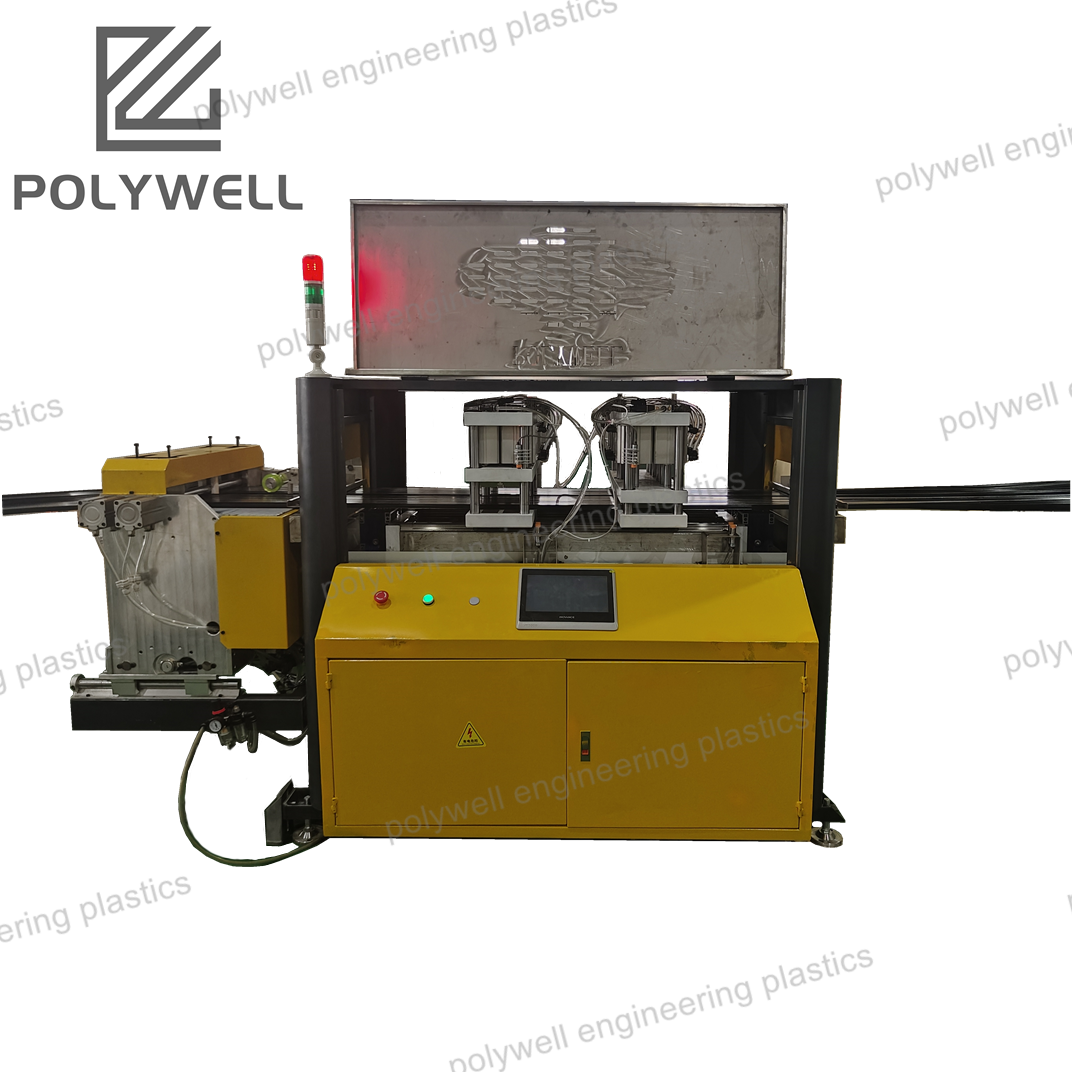

POLYWELL specializes in PA66 thermal insulation strips, offering polyamide granules, extruders, molds, winding machines, and comprehensive one-stop customization services.
Jinfeng Town, Zhangjiagang City, Suzhou City, Jiangsu Province, China
Copyright © 2024 Suzhou Polywell Engineering Plastics Co.,Ltd Privacy Policy