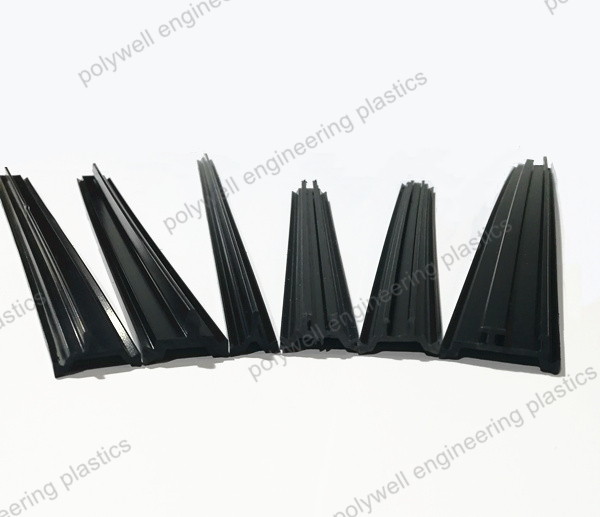
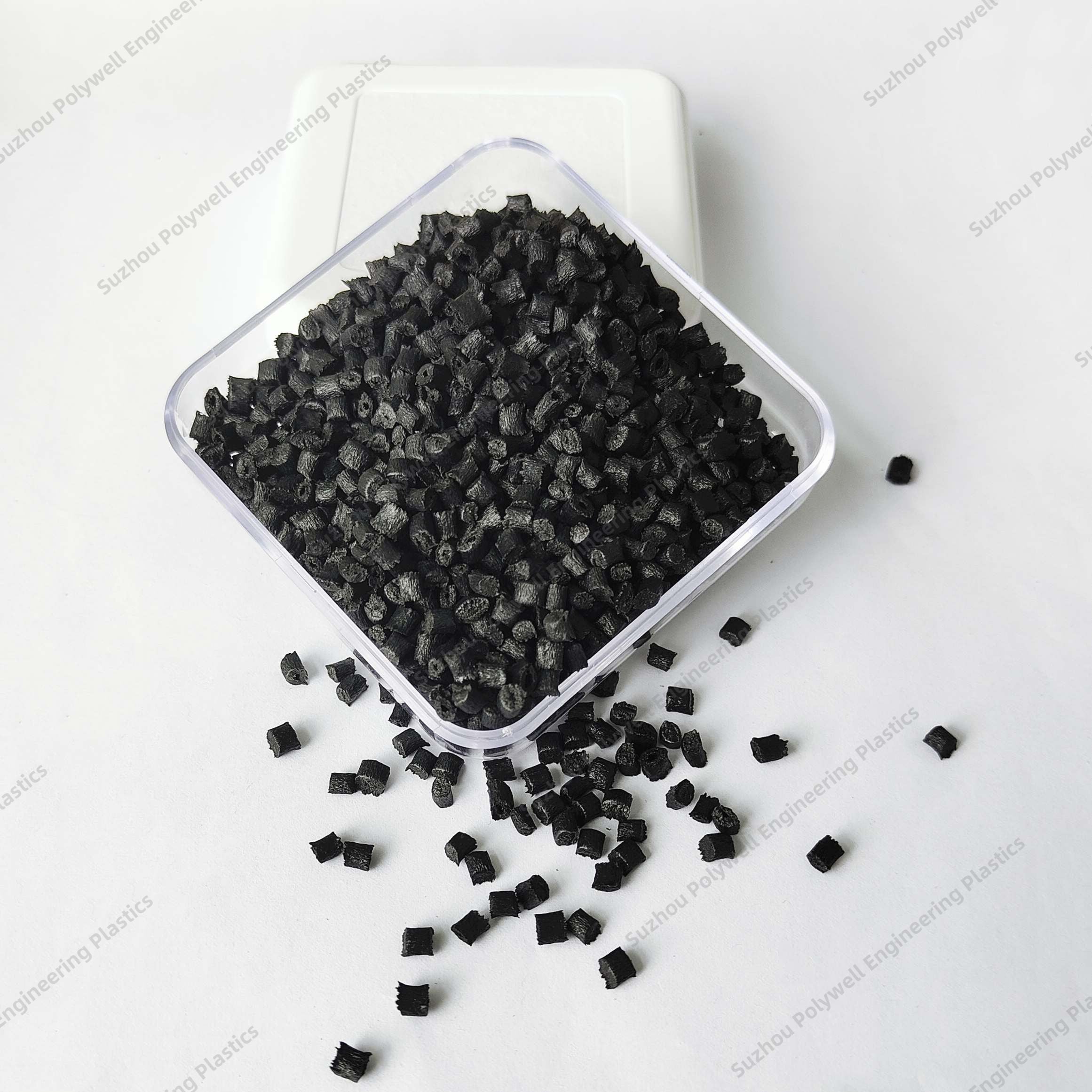
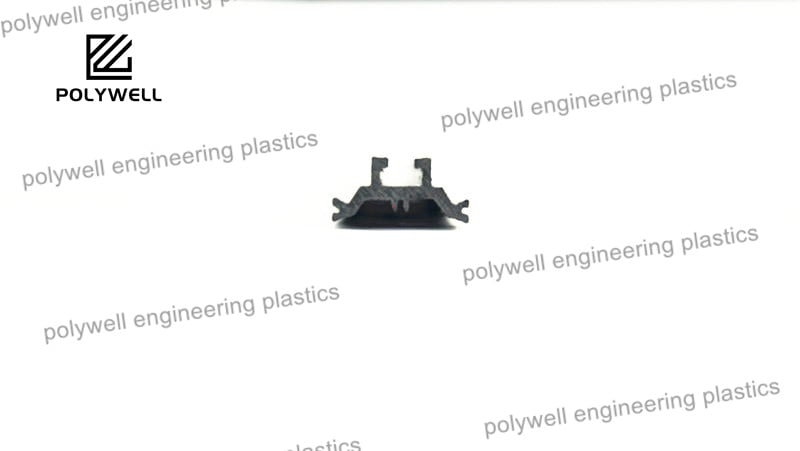
PA66 thermal break strips are the backbone of energy-efficient window and door systems, and their performance directly impacts building energy consumption and comfort. As a thermal break strip manufacturer with R&D experience since 2006, we know that evaluating pa66 strips requires focusing on core performance indicators (KPIs) that reflect their thermal, mechanical, and durability capabilities. Through our one-stop service—covering twin-screw granulated pa66 materials, single-screw extrusion equipment, and technical support—we help customers meet and exceed these KPIs, ensuring reliable, high-quality pa66 thermal break strips.
Thermal conductivity is the most critical KPI for pa66 thermal break strips, as it measures how well the material blocks heat transfer. High-quality pa66 strips should have a thermal conductivity of ≤0.3 W/(m·K)—any value higher than this creates heat bridges in aluminum frames. Our pa66 granules, produced with twin-screw extruders, achieve this low conductivity by leveraging uniform glass fiber dispersion. The twin screws intermesh to spread glass fibers (25-30% content) into the pa66 matrix, forming a network structure that reduces heat transfer paths. When these granules are extruded into strips via our single-screw extruders (the only equipment for pa66 strip production), the fiber network remains intact, ensuring consistent thermal conductivity across every strip. We test each batch of pa66 strips using a heat flow meter, guaranteeing they meet this KPI before delivery.
PA66 thermal break strips face high temperatures (e.g., direct sunlight on windows) in use, so heat distortion temperature (HDT) is another key thermal KPI. The HDT of pa66 strips should be ≥220°C under a 1.82MPa load—this ensures they don’t soften or deform in hot conditions. Our R&D team optimizes pa66 formulations by adding heat stabilizers, which boost HDT by 15-20% compared to standard pa66. The twin-screw granulation process ensures these stabilizers are evenly mixed into the pa66, avoiding localized weak points. During single-screw extrusion, we control the die temperature at 235-240°C to maintain the pa66’s molecular structure, further preserving its HDT. For customers, this means pa66 strips that retain their shape and insulation performance even in extreme summer temperatures.
PA66 thermal break strips must withstand installation stress and long-term use, so tensile strength is a non-negotiable KPI. The minimum tensile strength for high-quality pa66 strips is 80MPa—weaker strips break during aluminum profile assembly, leading to project delays. Our twin-screw granulated pa66 is the foundation of this strength: the twin screws’ shearing action disperses glass fibers evenly, creating a reinforced structure that resists pulling forces. When extruded via our single-screw extruders (calibrated for pa66’s viscosity), the strips maintain this fiber alignment, achieving a tensile strength of 82-85MPa. We use universal testing machines to measure tensile strength for every production lot, ensuring no pa66 strip falls below our standard. As part of our one-stop service, we also provide customers with test reports, verifying the strips’ mechanical performance.
Flexural modulus measures a pa66 strip’s resistance to bending—critical for preventing warping in window frames. A high flexural modulus (≥4500MPa) ensures the strip stays straight, even when pressed between aluminum profiles. Our pa66 strips achieve this by combining twin-screw granulation (which enhances fiber-polymer bonding) and precise single-screw extrusion (which avoids fiber breakage). The flexural modulus of our pa66 strips is consistently 4600-4800MPa, far exceeding the industry average of 4200MPa. This rigidity prevents the strips from bending under the weight of the frame or wind pressure, maintaining the window’s structural integrity and thermal insulation gap.
PA66 absorbs moisture, which causes dimensional changes—swelling or shrinking can break the seal between the strip and aluminum profile. The water absorption rate of pa66 thermal break strips should be ≤1.0% after 24 hours of immersion—higher rates lead to fit problems. Our pa66 granules undergo pre-drying (moisture content ≤0.1%) before single-screw extrusion, reducing the strip’s ability to absorb water. We also add hydrophobic additives during twin-screw granulation, further lowering water absorption to 0.8-0.9%. For customers in humid regions (e.g., coastal areas), this KPI is vital: it ensures pa66 strips don’t swell and disrupt the window’s insulation barrier, even in high-moisture environments.
Molding shrinkage rate affects the pa66 strip’s ability to fit aluminum profiles precisely. A low shrinkage rate (≤0.6%) ensures the strip’s final dimensions match the design, avoiding gaps. Our single-screw extruders are customized for pa66’s shrinkage characteristics: we control the cooling rate of the extruded strip (using water tanks at 20-25°C) to minimize shrinkage. The twin-screw granulated pa66 also contributes—its uniform density reduces uneven shrinkage, keeping the rate at 0.4-0.5%. We use laser dimension measuring tools to check every strip’s width (10-30mm) and thickness (1.5-3mm), ensuring they meet the shrinkage KPI. This precision eliminates the need for on-site trimming, saving customers time and labor costs.
PA66 thermal break strips in exterior windows are exposed to UV rays, which degrade the material over time. A key weather resistance KPI is UV resistance—strips should retain ≥80% of their tensile strength after 1000 hours of UV exposure. Our pa66 formulations include UV absorbers and hindered amine light stabilizers (HALS), added during twin-screw granulation for even distribution. We test pa66 strips in a xenon arc weatherometer (simulating sunlight) to verify this KPI, ensuring they don’t become brittle or discolored. For customers, this means pa66 strips that maintain performance for 20+ years, reducing replacement costs.
Thermal cycling (repeated heating and cooling) can cause pa66 strips to crack, so resistance to this stress is another key KPI. Our pa66 strips undergo 500 thermal cycles (-40°C to 80°C) without damage—this simulates 10 years of extreme weather. The twin-screw granulated pa66’s fiber network absorbs thermal stress, while the single-screw extrusion process ensures uniform thickness (avoiding weak points). As part of our one-stop service, we share thermal cycling test data with customers, proving the pa66 strips’ ability to withstand harsh climates.
Evaluating pa66 thermal break strips requires focusing on these KPIs—thermal conductivity, tensile strength, dimensional stability, and weather resistance. Our 17 years of R&D, twin-screw granulation technology, single-screw extrusion expertise, and one-stop service ensure every pa66 strip meets these standards. Whether you’re a window manufacturer or a building contractor, partnering with us means accessing pa66 thermal break strips that deliver reliable performance, lower energy costs, and long-term durability.
 Hot News
POLYWELL specializes in PA66 thermal insulation strips, offering polyamide granules, extruders, molds, winding machines, and comprehensive one-stop customization services.
Jinfeng Town, Zhangjiagang City, Suzhou City, Jiangsu Province, China
Copyright © 2024 Suzhou Polywell Engineering Plastics Co.,Ltd Privacy Policy

 EN
EN