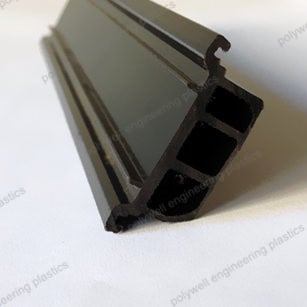
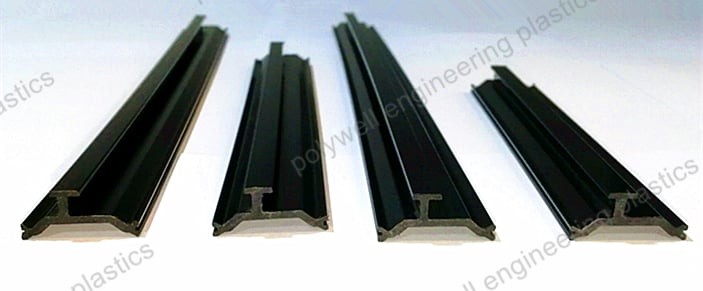
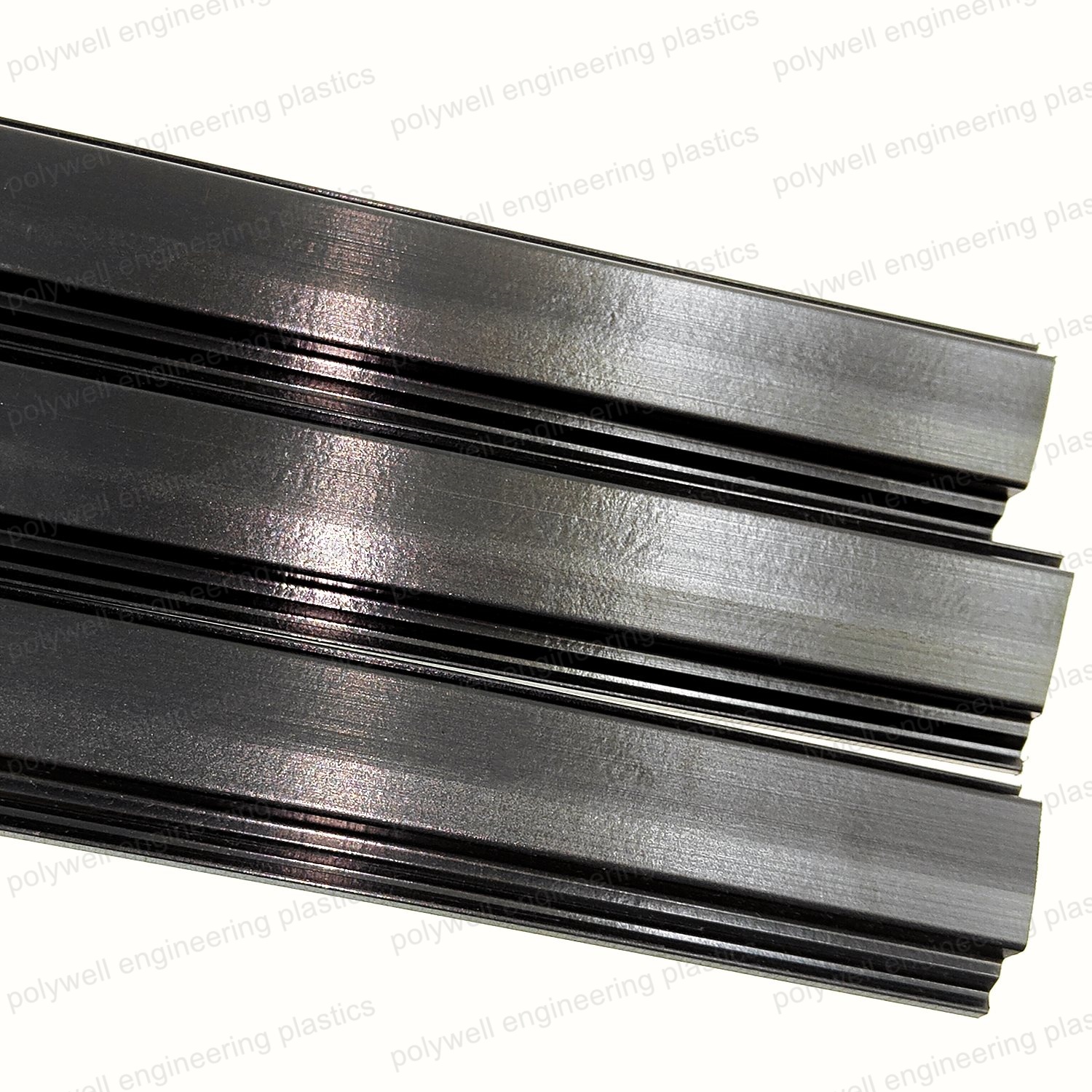
Thermal break strips, especially polyamide-based ones, rely heavily on advanced manufacturing technologies to meet strict performance standards. As a thermal break strip manufacturer with R&D experience since 2006, we’ve found that plastic extrusion technology stands out as the most reliable and efficient solution for producing high-quality strips. Through our one-stop service—built by partnering with extruder and mold manufacturers to form Polywell—we leverage plastic extrusion to deliver consistent, durable thermal break strips, while supporting customers with end-to-end production solutions.
Polyamide (nylon) is the primary material for thermal break strips due to its low thermal conductivity and high mechanical strength, but it requires precise processing to unlock its full potential. Plastic extrusion technology—especially when paired with our custom equipment—addresses polyamide’s sensitivity to temperature and viscosity. Our single-screw extruders (the only equipment capable of producing thermal break strips, as twin-screw extruders are limited to granulation) use gradual heating zones (230-245°C for PA66) to melt polyamide without degrading its molecular structure. This gentle processing preserves polyamide’s thermal insulation performance, ensuring the final strips maintain a thermal conductivity of 0.3 W/(m·K)—critical for blocking heat transfer in window frames.
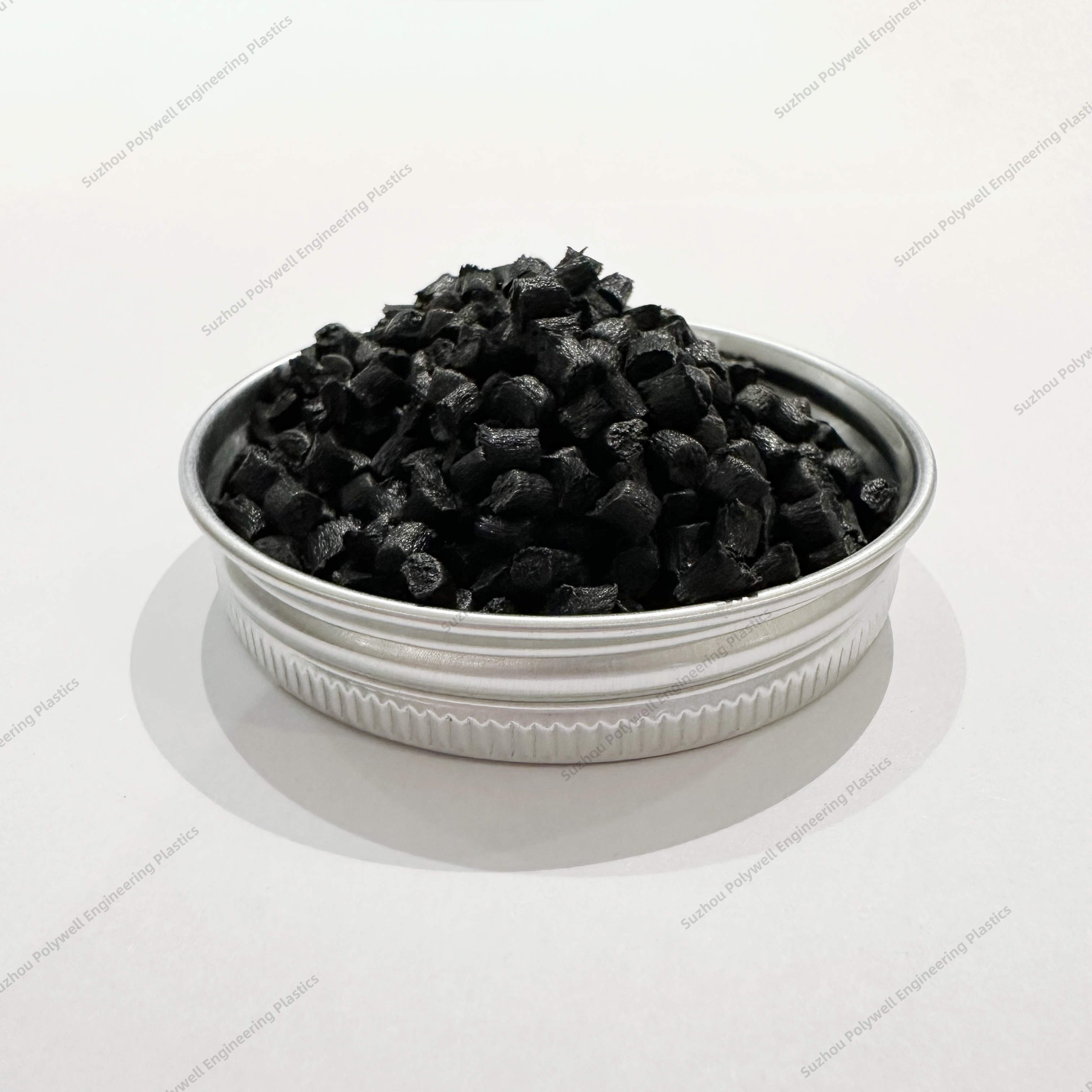
Glass fiber reinforcement is essential for boosting thermal break strips’ strength, but uneven fiber distribution can weaken strips or cause production issues. Our plastic extrusion ecosystem starts with twin-screw extruders for granulation—a key part of plastic extrusion technology that excels at mixing. The twin screws intermesh to evenly disperse glass fibers into polyamide, forming a dense network structure. Unlike single-screw granulation (which often leaves clumped fibers), this process ensures fibers are distributed at a consistent 25-30% content, enhancing the strips’ tensile strength to over 82 MPa. When these high-quality granules enter our single-screw extruders for strip forming, the plastic extrusion process maintains fiber alignment, avoiding breakage that would compromise performance. This seamless transition from twin-screw granulation to single-screw strip extrusion is a unique advantage of our plastic extrusion system.
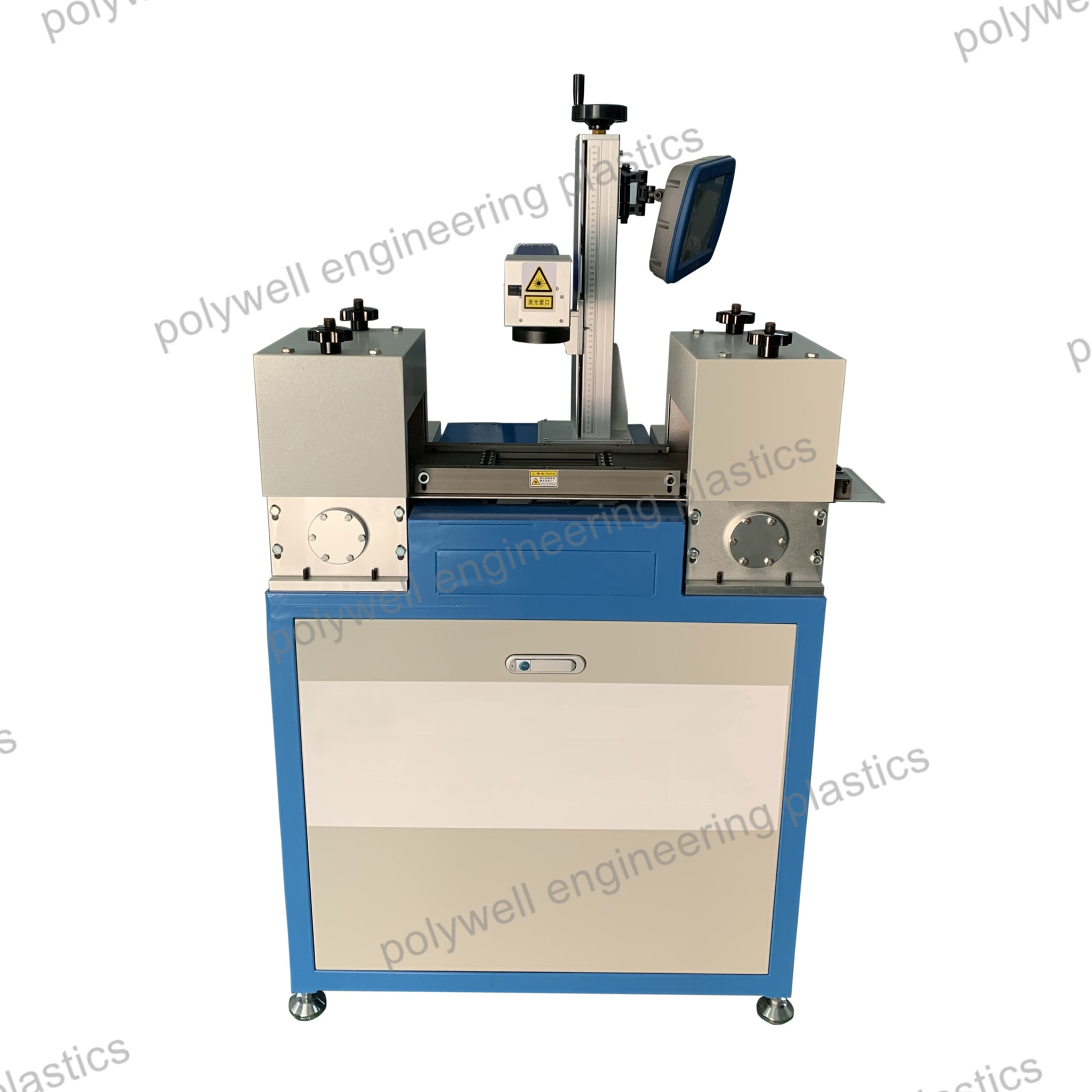
Plastic extrusion technology enables continuous production— a game-changer for meeting high-volume orders. Traditional manufacturing methods (like injection molding) require frequent mold changes and batch processing, leading to downtime. Our single-screw extruders, a core part of plastic extrusion, can run 24/7 with minimal interruptions, producing 3-5 kg of thermal break strips per hour. This continuous output cuts production lead times by 40% compared to batch methods. As part of our one-stop service, we also integrate auxiliary equipment (like automatic granule feeders and strip cutters) with the extrusion line, ensuring a smooth flow from material to finished product. This integration eliminates manual handling delays, further boosting efficiency.
Thermal break strips come in various sizes (width 10-30mm, thickness 1.5-3mm) to fit different window frames, and plastic extrusion technology allows quick adjustments to meet these needs. Our plastic extrusion systems have digital control panels that let operators tweak parameters (screw speed, temperature, die gap) in real time. For example, switching from a 20mm to 25mm wide strip only requires adjusting the extrusion die’s lip gap and increasing the screw speed by 5-10 rpm— a process that takes 15 minutes, compared to hours for mold changes in other methods. This flexibility helps customers adapt to changing orders without sacrificing efficiency, a key advantage in the competitive thermal break market.
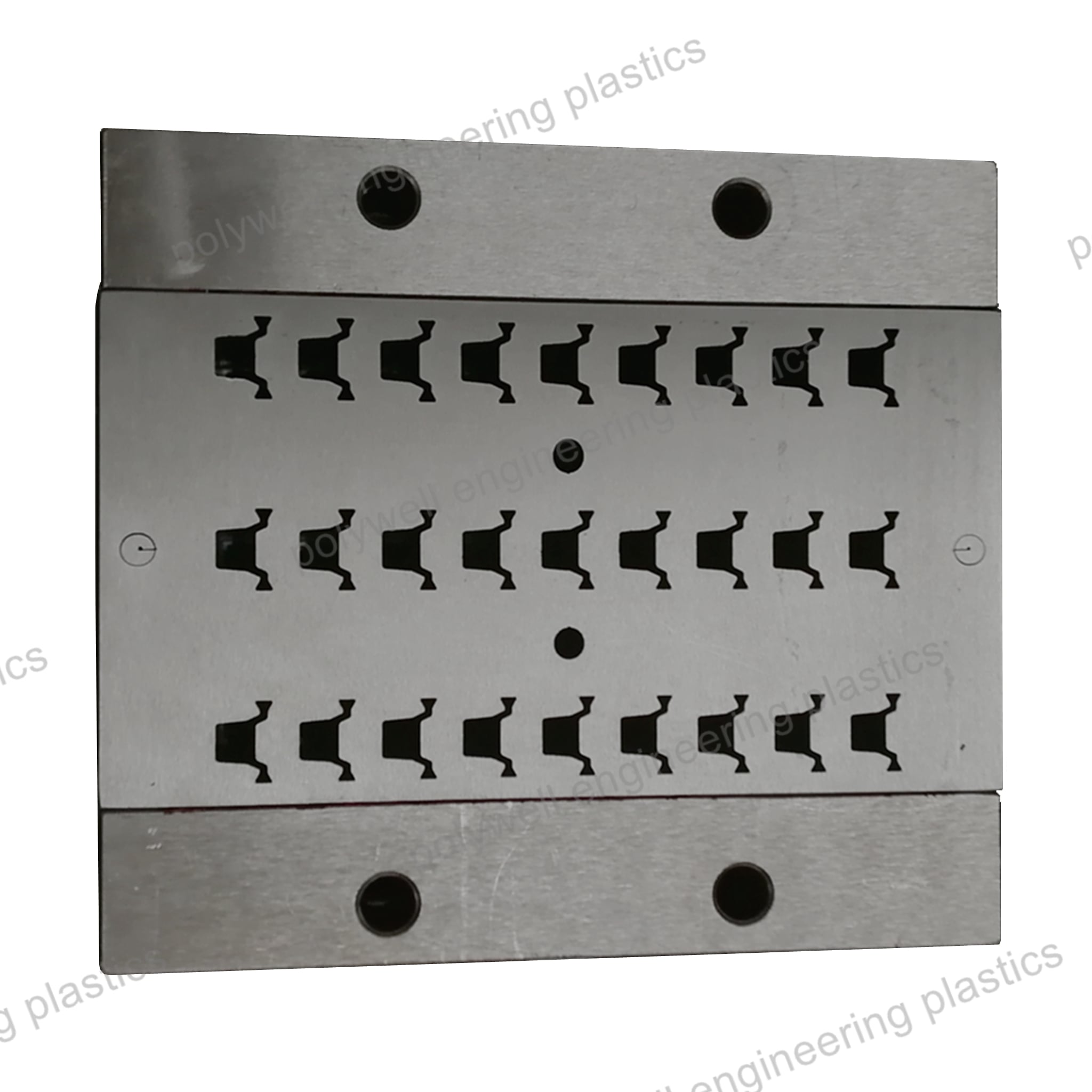
Thermal break strips require strict dimensional precision to fit aluminum profiles tightly— even a 0.05mm deviation can cause air leakage and reduce thermal insulation. Plastic extrusion technology, when paired with precision dies, delivers this consistency. Our plastic extrusion line includes custom-designed extrusion dies (developed with our mold manufacturing partner) that have symmetrical flow channels and micrometer-adjustable die lips. The single-screw extruder’s stable pressure (18-20 MPa) ensures polyamide melt flows evenly through the die, producing strips with thickness deviation ≤0.03mm. The plastic extrusion process also creates a smooth surface finish (Ra ≤0.8μm), eliminating the need for post-processing like sanding. This consistency reduces scrap rates to ≤1%, far below the industry average of 3-5%.
Plastic extrusion technology’s controlled processing conditions ensure every thermal break strip has uniform performance. Our twin-screw granulation (a precursor to strip extrusion) produces granules with consistent density (1.13-1.15 g/cm³), and the single-screw extrusion process maintains this uniformity by avoiding overheating or uneven mixing. As a result, every strip has the same tensile strength, thermal conductivity, and heat resistance (-40°C to 80°C). We test samples from every extrusion batch to verify performance, and our one-stop service includes providing these test reports to customers— ensuring they receive strips that meet international standards like GB/T 23615.1.
Plastic extrusion technology minimizes material waste, a major cost saver for manufacturers. The continuous production process uses raw materials efficiently— excess polyamide melt can be recycled back into the extrusion line (after regranulation via our twin-screw extruders), reducing waste to ≤2%. In contrast, batch methods often generate 5-10% waste due to setup and mold changes. Our one-stop service includes guidance on material recycling, helping customers lower raw material costs while reducing environmental impact.
Our plastic extrusion systems are designed for durability, reducing maintenance costs. The single-screw extruders have hardened screws and barrels (50-52 HRC) that resist wear, lasting up to 5 years with regular maintenance. Twin-screw granulators, meanwhile, have modular parts that are easy to replace, cutting repair time. As part of our one-stop service, we provide preventive maintenance plans (monthly inspections, quarterly lubrication) and supply genuine replacement parts, ensuring the extrusion line runs smoothly with minimal downtime. This reliability lowers long-term operational costs, making plastic extrusion a cost-effective choice for thermal break strip manufacturers.
Plastic extrusion technology’s advantages— material compatibility, efficiency, precision, and cost-effectiveness— make it irreplaceable for thermal break strip manufacturing. Our 17 years of experience, combined with our one-stop service (twin-screw granulation, single-screw extrusion, custom dies, and technical support), let us fully leverage these advantages to deliver value to customers. Whether you’re producing standard or custom thermal break strips, plastic extrusion technology— when paired with our tailored solutions— ensures you get high-quality products at competitive costs.
 Hot News
POLYWELL specializes in PA66 thermal insulation strips, offering polyamide granules, extruders, molds, winding machines, and comprehensive one-stop customization services.
Jinfeng Town, Zhangjiagang City, Suzhou City, Jiangsu Province, China
Copyright © 2024 Suzhou Polywell Engineering Plastics Co.,Ltd Privacy Policy

 EN
EN