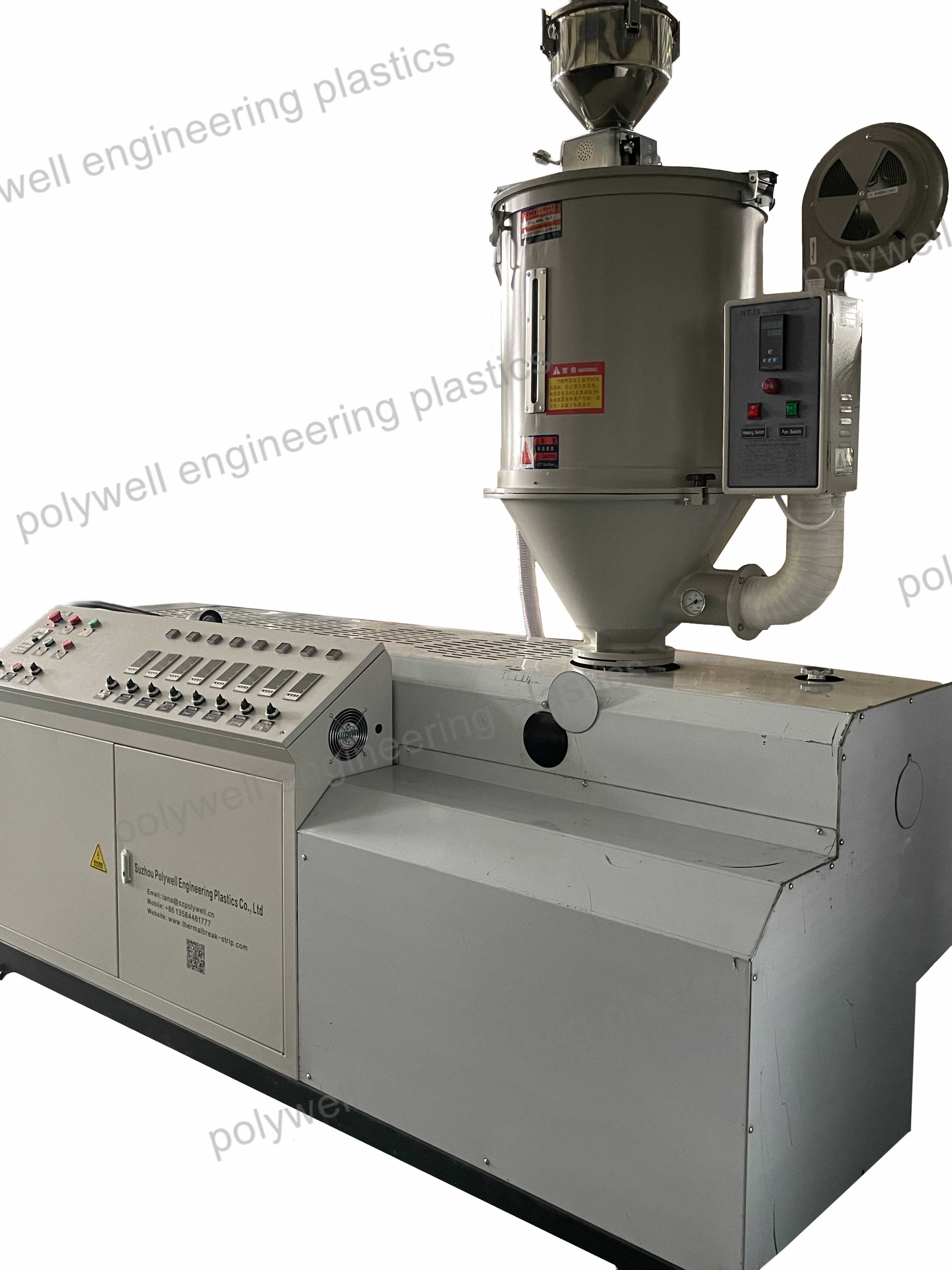
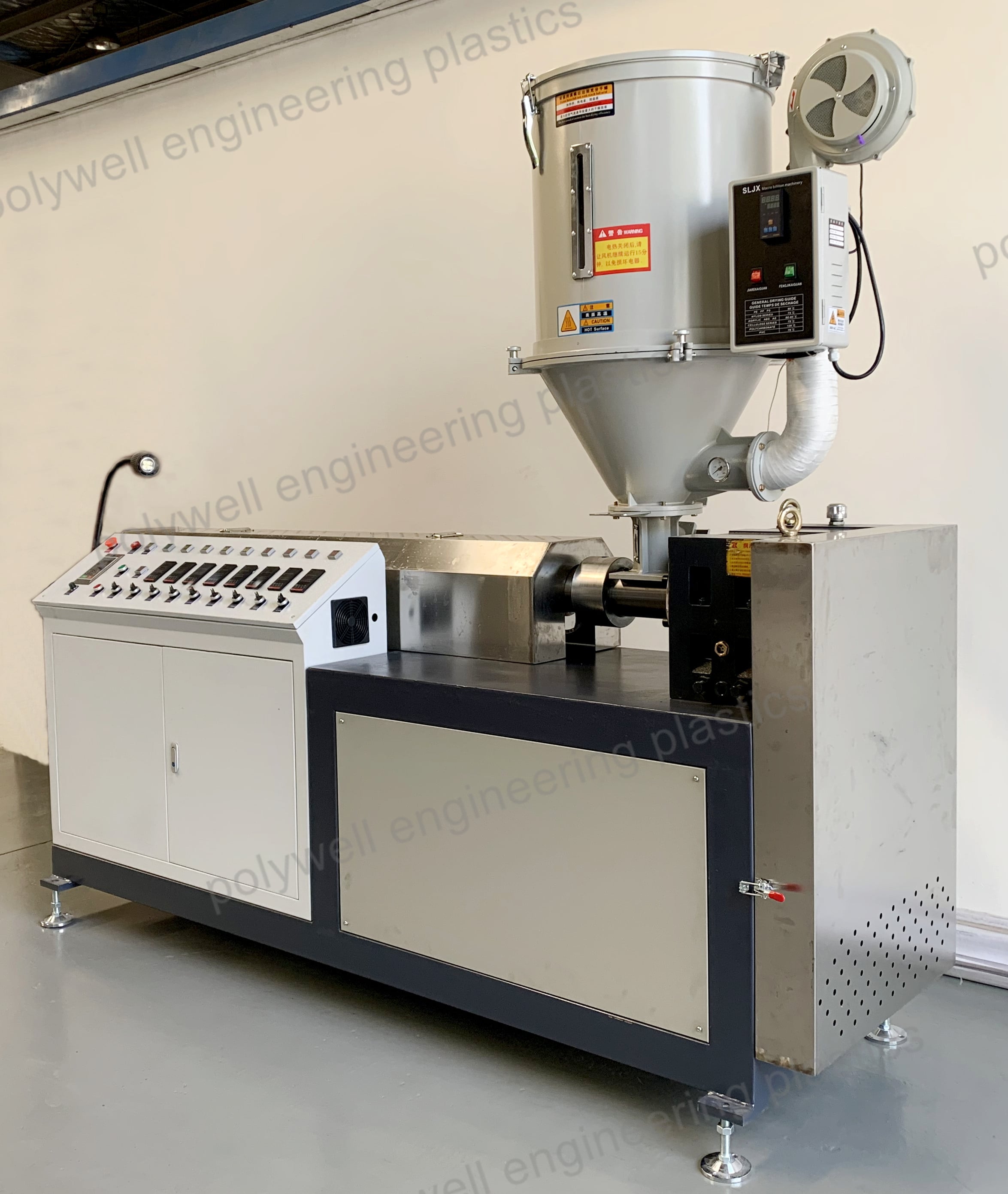
The shape and design of screws plays a major role in how well materials melt and what kind of products come out of single screw extruders. Things like pitch, how deep those channels are cut, and special mixing parts all affect how polymers behave during processing. When we talk about shallow channels in the compression area, they create more shear force which helps speed up melting. Deeper channels in the feeding section actually help move solid materials along better. For mixing, certain sections with things like fluted designs or blister rings really boost distributive mixing properties. According to some industry research from Ponemon back in 2023, this can cut down temperature differences by around 12% when making thermal break strips. Screws that have these staggered kneading blocks tend to get about 92% material consistency, whereas regular setups only reach about 78%. This makes a real difference in preventing those pesky thermal bridges in finished profiles.
The length to diameter (L/D) ratio plays a big role in several key areas including how long material stays in the system, melt stability during processing, and overall energy consumption. When looking at systems with L/D ratios over 30:1 compared to those around 20:1, we see residence times actually extend by about 40%. This extra time allows proper melting of tough materials such as PA66 which requires thorough plastication before processing. But going beyond 40:1 starts costing more in terms of energy usage, typically increasing consumption by roughly 18% without much improvement in material uniformity. Most industry experts point to somewhere between 28:1 and 32:1 as the sweet spot for thermal break applications. At these ratios, manufacturers can manage both the risk of material degradation while still meeting production targets usually ranging from 120 to 150 kilograms per hour.
The amount produced goes up with the square of the screw size actually. Take a look at numbers: a 120mm screw can produce about 2.6 times what a 90mm one does in each rotation. Bigger screws mean more stuff gets made faster too (think around 280 kg per hour compared to just 170 kg when going from 100mm down to 80mm). But there's a catch here. The bigger the screw, the less shear force it generates, somewhere between 30% and 40% reduction. That might mess with how evenly everything mixes together. So picking the right size really depends on what kind of material we're dealing with. For runny stuff like PVC, most folks find that 90 to 110mm works pretty well. But those thick TPUs need something smaller, usually between 60 and 80mm, so they get enough mixing action to spread things out properly.
Getting the temperature zones right along the barrel is what controls how polymers flow when making thermal break strips. In the feed zone area, keeping temps below what's called the glass transition point helps compact the material without it melting too early. When the stuff moves into the compression zone, we apply controlled heating usually around 170 to 190 degrees Celsius for those PA66 based materials. This brings down the viscosity so everything mixes properly. Then comes the metering zone where things get balanced between the heat generated by shearing and whatever extra heat we put in. This balance keeps the flow stable which is really important if we want to hit those tight dimensional tolerances within plus or minus 1.5 percent. Some research published last year showed that nearly two thirds of all extrusion problems actually come from bad thermal gradients. That makes sense why so many plants are investing in systems that monitor these conditions in real time now.
When working with PA66 GF25 thermal break strips, getting the zone profiles right makes all the difference in maximizing production while keeping those mechanical properties intact. The feed zones need to stay around 160 to 170 degrees Celsius to stop any bridging issues from happening. Compression zones are trickier - they should hit somewhere between 185 and 200 degrees to handle that tricky 85% crystallinity change properly. Metering zones then settle down at around 190 to 205 degrees, which helps maintain those melt pressures between 25 and 35 MPa so everything flows consistently through the die. Some interesting industry numbers show there's actually a pretty strong connection between how accurate we keep those compression zone temperatures within plus or minus 2 degrees and the resulting R-value consistency. And here's something worth noting for manufacturers looking to cut costs: this level of precision can slash energy consumption by nearly 18% compared to older extruder systems, based on recent polymer processing studies from early 2024.
Going over the ideal temperature range by merely 10 to 15 degrees Celsius can cause serious issues with thermal break materials as it speeds up chain scission processes, which ultimately cuts down impact strength by around 40 percent according to ASTM D256-23 standards. Modern equipment now incorporates closed loop cooling systems that respond within less than half a second against shear heating problems. Cooling jackets positioned strategically in areas where shear forces are highest help maintain melt temps no more than 5 degrees away from target settings, something critical for maintaining those flame retardant characteristics especially important when working with halogen free compounds. Field tests have demonstrated that when manufacturers combine PID controlled heating methods with adjustments to screw speed parameters, they see roughly a two thirds reduction in thermal degradation rates while still managing production volumes around 85 kilograms per hour.
The speed of the screw really affects how much gets produced, and generally speaking, output goes up pretty steadily when running at lower RPMs. But once we get past about 70 RPM things start getting interesting. If someone doubles the speed from 50 to 100 RPM, they'll actually see their output jump only around 65%. Worse still, the temperature fluctuations become quite significant here, sometimes exceeding 40 degrees Celsius because of all that friction and partial melting happening inside. For anyone working on this stuff day to day, matching those RPM numbers to what kind of material is being processed becomes absolutely critical. Take HDPE for instance, which is one of those semi crystalline plastics. These materials need roughly 15 to 20 percent slower speeds compared to something like amorphous ABS if we want to keep those thermal breaks looking consistent throughout production runs.
The way polymers behave in terms of their thickness and stretchiness really affects how pressure builds up during processing and keeps the flow consistent throughout. According to research from Abeykoon and colleagues back in 2020, materials that get thinner under stress can cut down on energy usage by around 18 percent when compared to regular Newtonian fluids. When working with modified PVC that has high melt elasticity, we typically see die swell jump anywhere from 30 to 40 percent. This means operators need to carefully manage screw speeds if they want parts that meet dimensional specifications. Problems with flow stability such as melt fracture tend to happen once wall shear stress goes over about 0.25 MPa. To avoid these issues and keep production running smoothly, manufacturers must pay close attention to the design of compression zones in their equipment.
The thermal conductivity differences in additives really impact how heat moves through materials. Glass fiber has a much lower conductivity range at around 0.8 to 1.2 W/mK compared to calcium carbonate's higher value of about 2.6 W/mK. This difference changes the way heat transfers through barrels by roughly 22 to 35 percent. When it comes to Polyamide 66, its relatively low specific heat capacity of 1.7 kJ per kgK means it melts quickly during processing. However, this same property makes it prone to degradation once temperatures exceed 295 degrees Celsius, so operators need to maintain tight temperature controls within plus or minus 2 degrees. Most problems seen in extrusion processes actually come down to poor cooling rates. Studies show that over two thirds of all defects are caused by cooling that doesn't keep pace with the material's crystallization speed, leading to warping issues particularly noticeable in thermal break strip applications.
 Hot News
POLYWELL specializes in PA66 thermal insulation strips, offering polyamide granules, extruders, molds, winding machines, and comprehensive one-stop customization services.
Jinfeng Town, Zhangjiagang City, Suzhou City, Jiangsu Province, China
Copyright © 2024 Suzhou Polywell Engineering Plastics Co.,Ltd Privacy Policy

 EN
EN