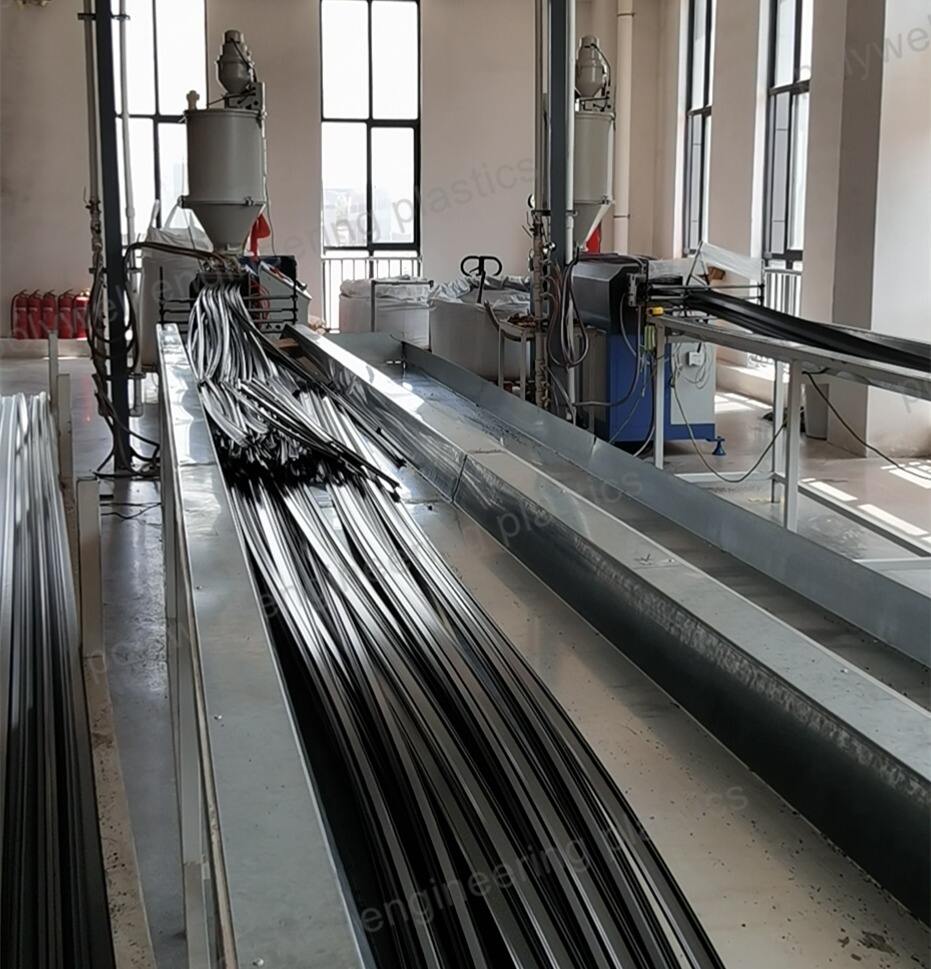
Extruders are the core mechanical units in extrusion-based manufacturing processes, primarily used in the plastics, food, and metallurgy industries. In the context of plastics, an extruder is a machine that continuously conveys, melts, homogenizes, and pressurizes thermoplastic materials. Its fundamental components are a rotating screw housed within a stationary, heated barrel. The screw geometry is meticulously designed with different sections—feed, compression, and metering—to efficiently handle the solid-to-melt transition and generate the pressure needed to push the melt through a die. Extruders are categorized mainly by their screw configuration. Single-screw extruders are the most common, valued for their simplicity and effectiveness in many profile and sheet applications. Twin-screw extruders, which can be co-rotating or counter-rotating, provide superior mixing, devolatilization, and control, making them ideal for compounding additives, processing PVC powder, or handling heat-sensitive and filled polymers. The performance of an extruder is defined by parameters such as its screw diameter, L/D (length-to-diameter) ratio, drive power, and its ability to deliver a stable, uniform melt at a consistent pressure, which is the foundation for a quality extrusion process.