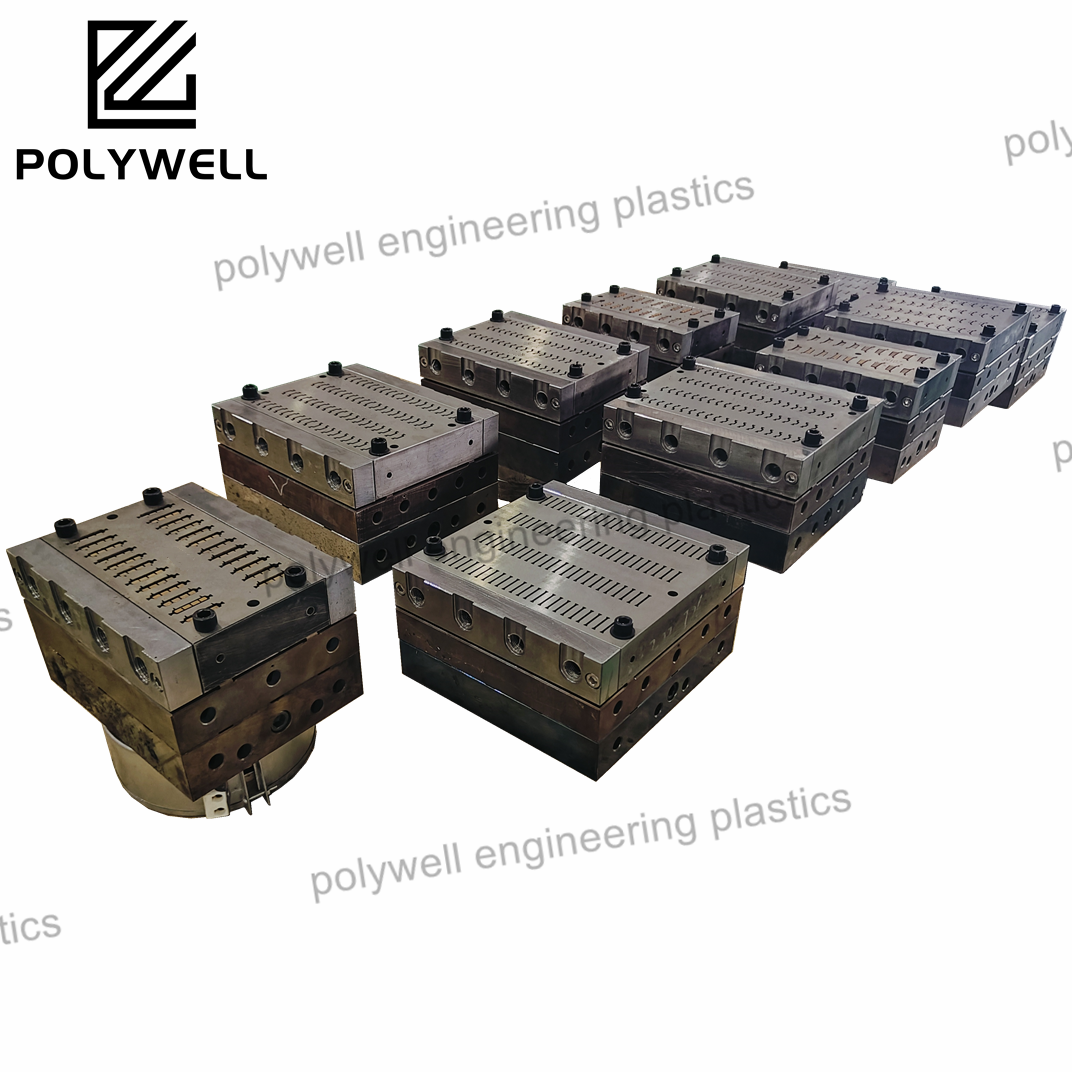
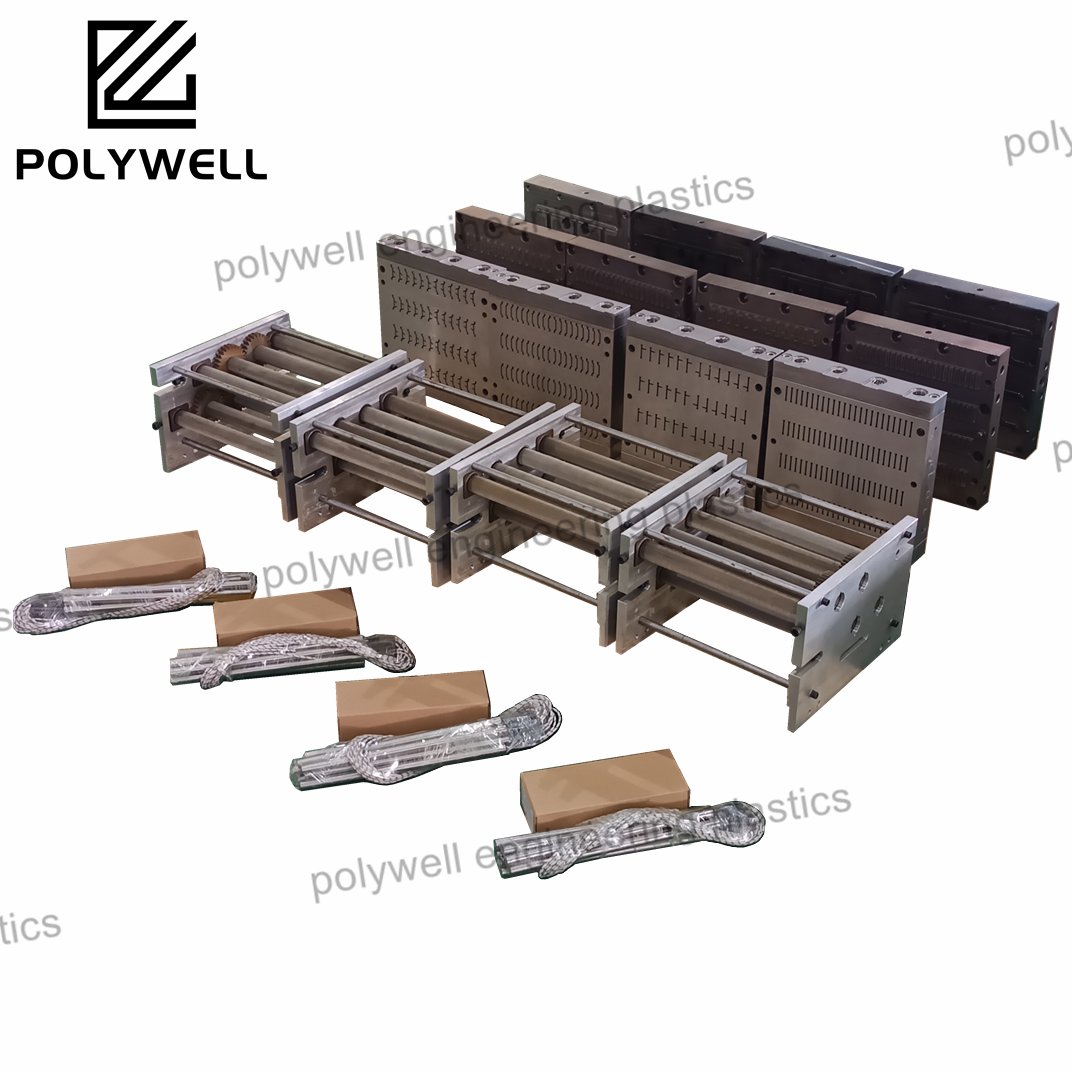
Uniform thickness is a critical factor for polyamide thermal break strips, as unevenness can reduce thermal insulation performance and cause fitting issues with aluminum window frames. As a professional thermal break strip manufacturer with R&D experience since 2006, we understand that the extrusion die plays a core role in achieving consistent thickness. Through our one stop service, which covers raw materials, extrusion equipment and technical support, we help customers master extrusion die design key points and produce high quality thermal break strips.
The flow channel inside the extrusion die directly affects how polyamide melt distributes. To ensure uniform thickness, the flow channel should adopt a symmetrical fan shaped structure. This design avoids dead zones where melt might accumulate and ensures equal flow resistance at every point of the die outlet. Our team optimizes flow channel length and width based on polyamide’s viscosity—for example, for glass fiber reinforced polyamide (common in thermal break strips), the flow channel is slightly widened to prevent fiber clogging. Such precise design ensures that melt flows out evenly, laying the foundation for consistent strip thickness.
Polyamide melt is sensitive to temperature changes, and uneven die temperature can lead to inconsistent melt viscosity, resulting in uneven thickness. A high quality extrusion die must have a multi zone temperature control system. We usually divide the die into 3-4 temperature zones, each with independent heating and cooling modules, controlling the temperature within ±1°C. For instance, the die inlet zone (closer to the single screw extruder) is set to 235-240°C to maintain melt fluidity, while the outlet zone is slightly lower (225-230°C) to help the strip shape quickly. This temperature gradient ensures stable melt flow and uniform thickness.
The die lip is the final part of the extrusion die that shapes the thermal break strip, so its precision and adjustability are essential. Our extrusion dies use a micrometer adjustable die lip, with an adjustment accuracy of 0.01mm. During production, operators can fine tune local die lip gaps based on real time thickness detection—if the strip’s edge is thinner, they can slightly widen the corresponding die lip gap. Additionally, the die lip surface is polished to a roughness of Ra 0.8μm or lower, reducing friction between melt and die lip and avoiding uneven flow caused by surface resistance differences.
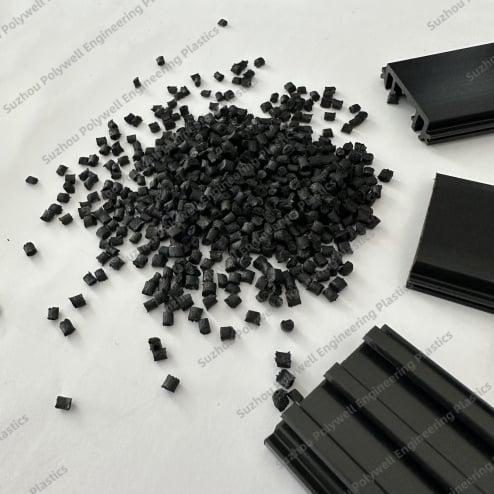
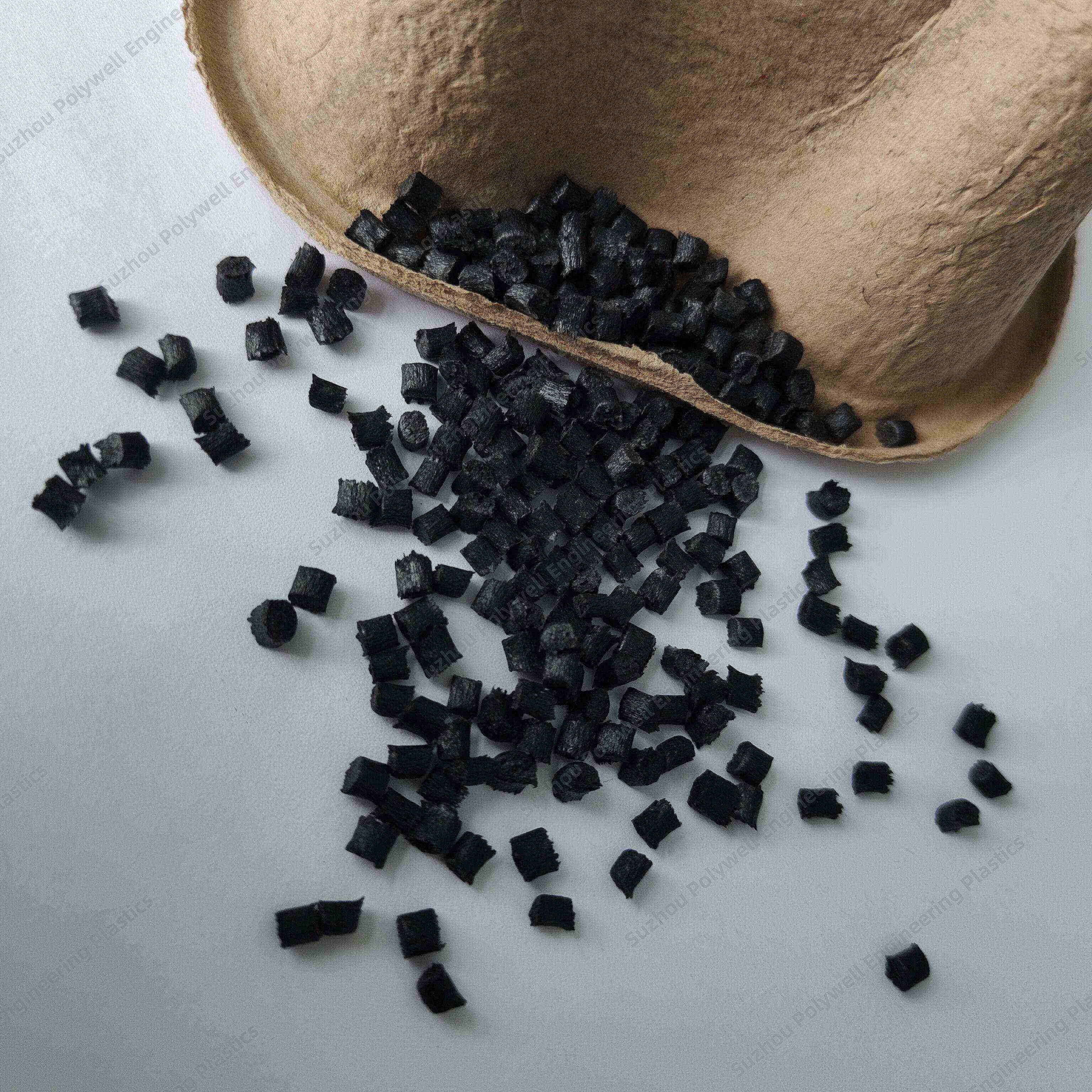
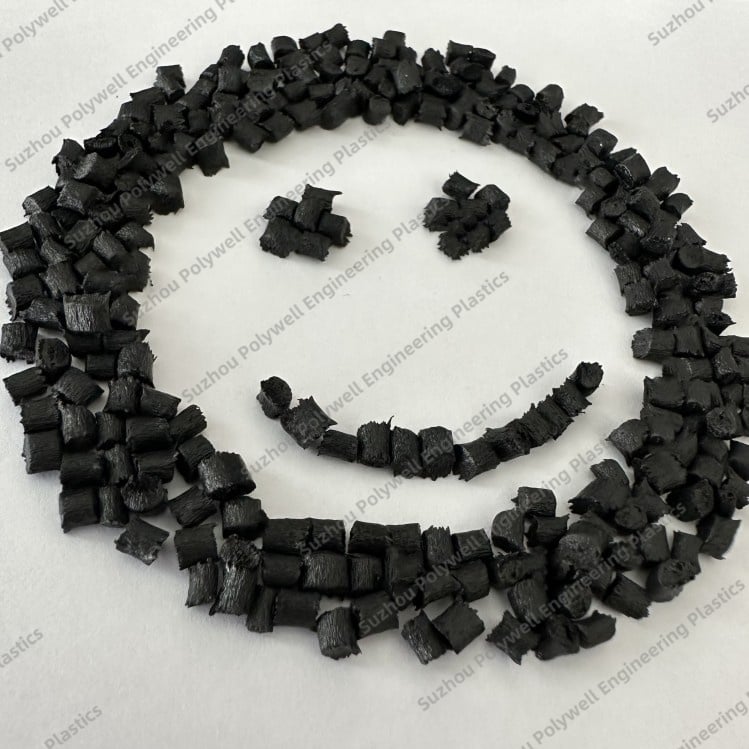
High quality polyamide granules (made by our twin screw extruders) require extrusion dies that can maximize their performance. Twin screw extruders disperse glass fibers evenly into polyamide, forming a network structure that enhances granule strength. The extrusion die’s flow channel must be smooth enough to protect this network structure—sharp corners in the channel would break glass fibers, reducing strip strength and causing thickness fluctuations. Our dies are designed with rounded flow channel corners (radius ≥5mm) to ensure the granule’s fiber structure remains intact, while the uniform flow channel ensures the fiber reinforced melt distributes evenly, maintaining consistent thickness.
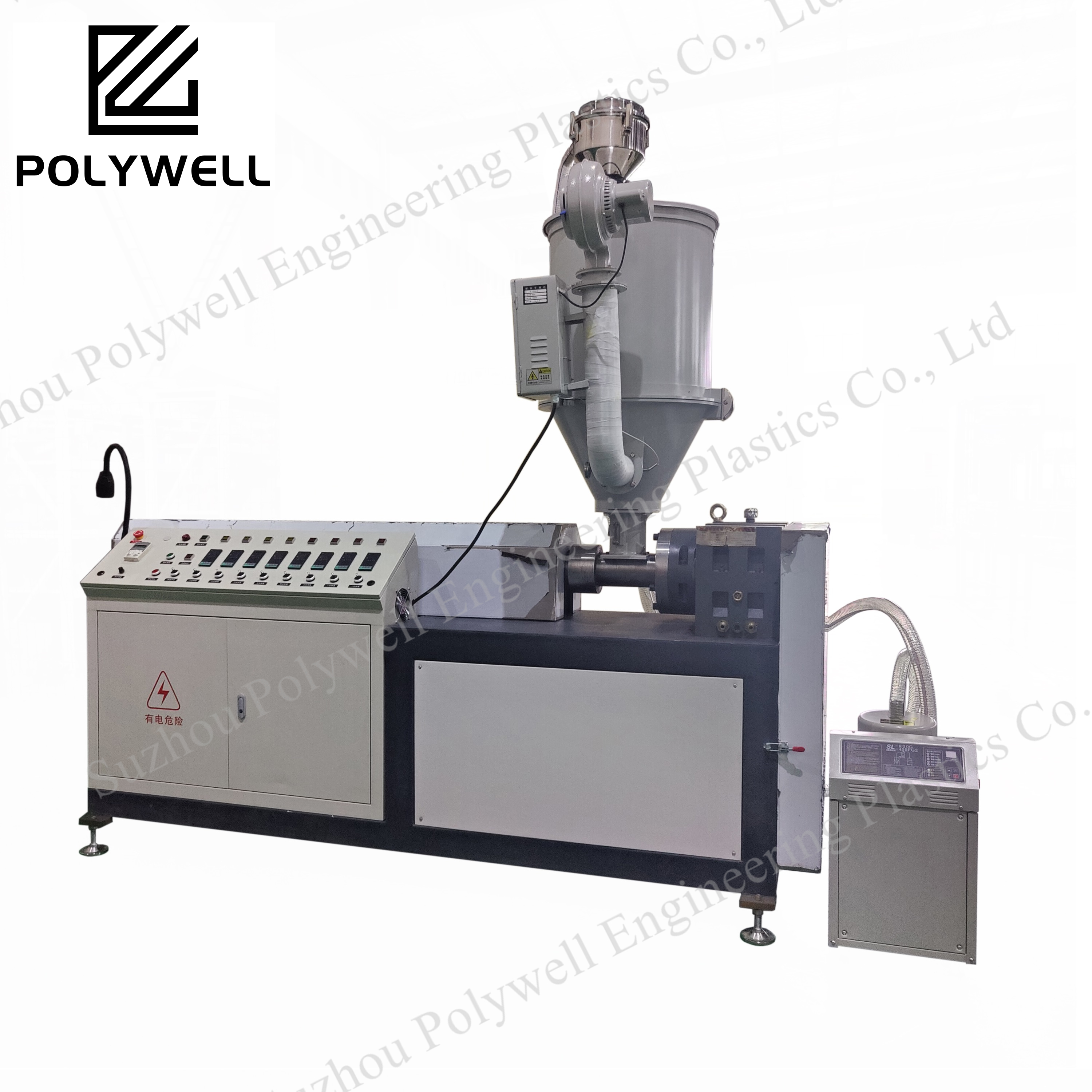
It’s important to note that only single screw extruders can produce polyamide thermal break strips (twin screw extruders are for granulation only), so the extrusion die must match single screw extruder characteristics. Single screw extruders provide stable but relatively low shear force, so the die’s inlet angle is designed to 30-45°—this angle reduces melt resistance when entering the die, ensuring continuous and uniform melt supply. Our one stop service includes matching extrusion dies with our custom single screw extruders: we pre test die extruder compatibility, adjusting die parameters (like flow channel volume) to match the extruder’s output speed, avoiding thickness issues caused by mismatched equipment and die.
As a one stop service provider, we don’t just sell standard extrusion dies—we develop customized dies based on customers’ thermal break strip specifications. Our team (in collaboration with our mold manufacturing partner) analyzes factors like strip width (10-30mm common), thickness (1.5-3mm) and cross-sectional shape, then designs dies with corresponding flow channels and die lips. For example, for T shaped thermal break strips, we add a secondary flow channel in the die to ensure melt fills the T shaped cavity evenly, preventing thinner parts in the “T” branches.
Our service doesn’t end with die delivery. We send engineers to customers’ sites to guide extrusion die installation—proper alignment between die and single screw extruder (coaxiality error ≤0.1mm) is critical for uniform thickness. We also provide die maintenance training: regular cleaning (using polyamide cleaning agents) to remove residual melt, and periodic die lip precision checks (using dial indicators) to adjust gaps that may have changed due to long term use. These steps ensure the die maintains its performance, consistently producing uniform thickness strips.
To confirm extrusion die effectiveness, our one stop service includes thickness testing support. We provide customers with on line thickness detectors that sync with the extrusion die—if the detector finds thickness deviations, it sends signals to adjust the die lip in real time. Additionally, we conduct off line tests (using micrometers to measure 10 points on each strip) to verify die performance, ensuring the strips meet GB/T 23615.1 standards. This full cycle quality control, from die design to testing, helps customers avoid thickness related product defects.
Designing extrusion dies for uniform polyamide thermal break strip thickness requires integrating die structure optimization, raw material adaptation and equipment matching. As a thermal break strip manufacturer with 17 years of experience and one stop service capabilities, we combine twin screw granulation technology, single screw extruders and customized extrusion dies to provide customers with comprehensive solutions. With our support, customers can easily master die design key points and produce high quality thermal break strips with consistent thickness.
 Hot News
POLYWELL specializes in PA66 thermal insulation strips, offering polyamide granules, extruders, molds, winding machines, and comprehensive one-stop customization services.
Jinfeng Town, Zhangjiagang City, Suzhou City, Jiangsu Province, China
Copyright © 2024 Suzhou Polywell Engineering Plastics Co.,Ltd Privacy Policy

 EN
EN