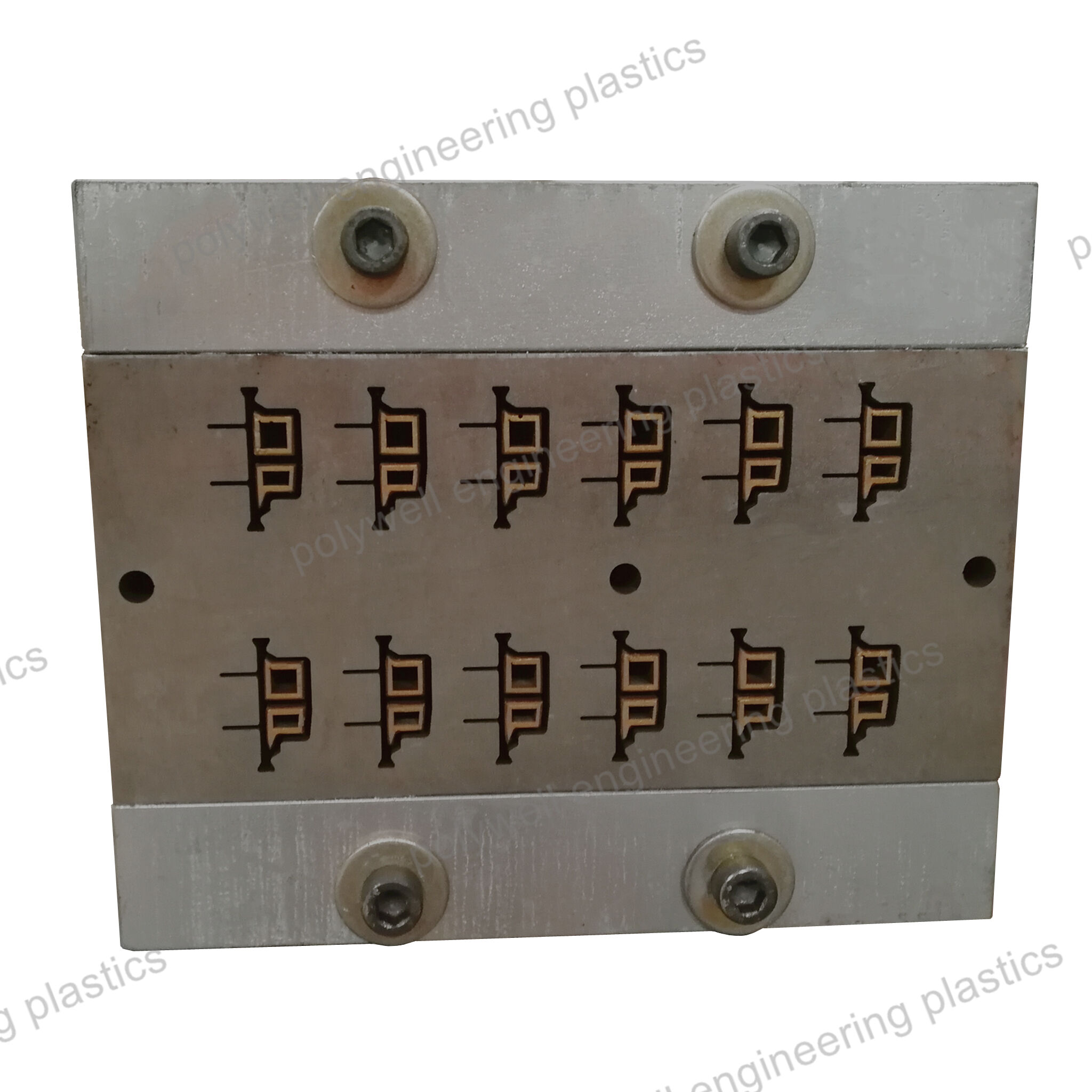
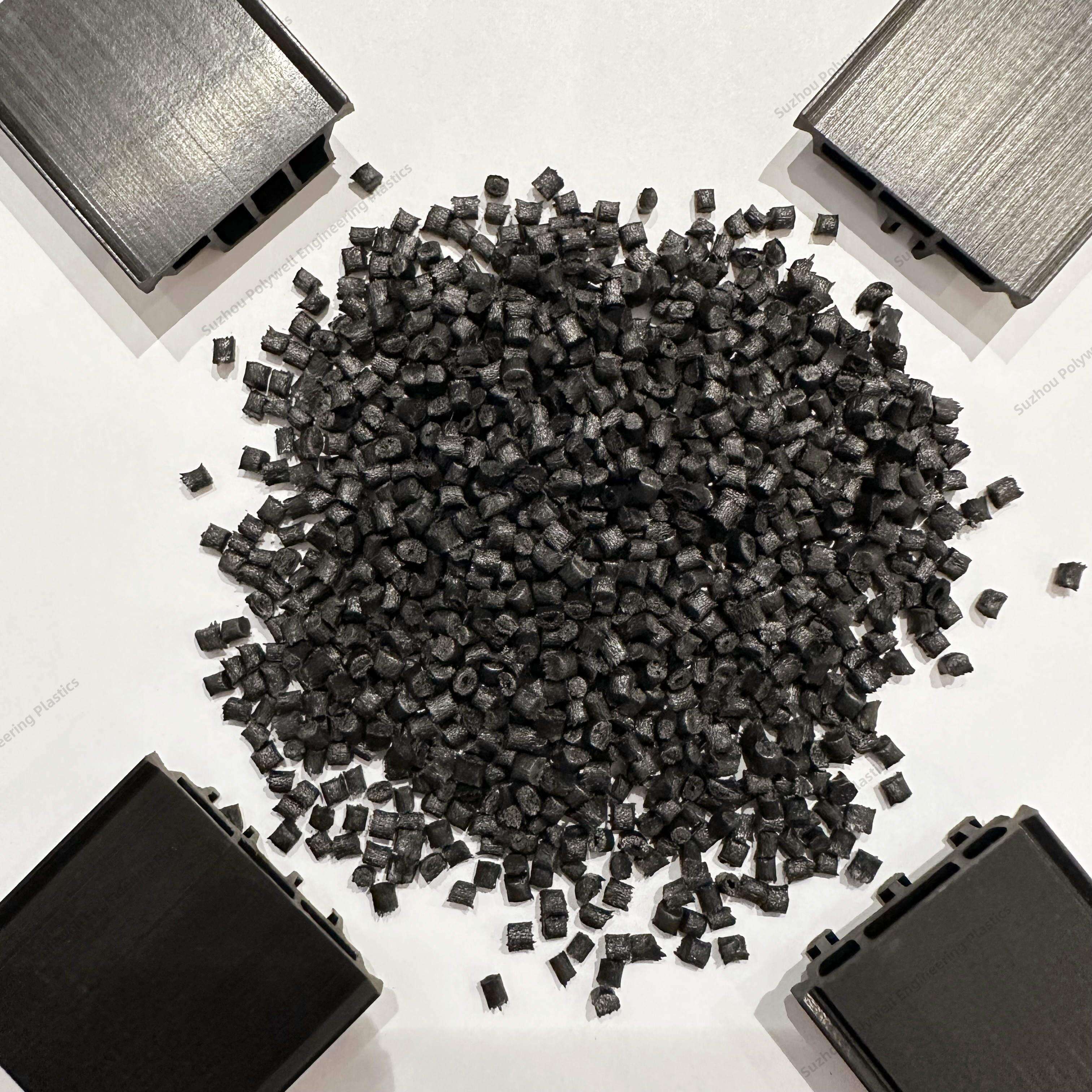
Effective extrusion die design determines both the structural integrity of thermal break strips and the efficiency of their production. Industry studies show that 92% of manufacturing defects in polyamide-based thermal barriers stem from suboptimal die geometry (2024 Polymer Processing Review).
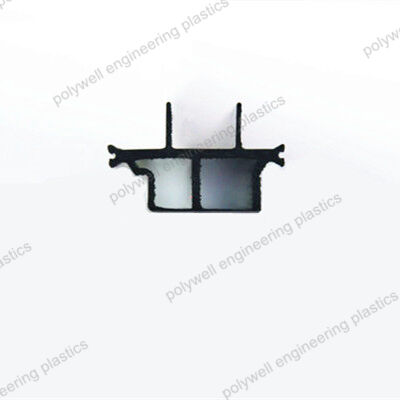
Precision-machined die openings compensate for material shrinkage–typically 2–4% in polymer composites–while maintaining tight ±0.1 mm dimensional tolerances. For hollow-chamber thermal breaks, stepped mandrel designs prevent flow stagnation, preserving insulation performance by ensuring consistent wall thickness.
Modern extrusion dies use computational fluid dynamics (CFD) to optimize runner geometries, limiting material velocity variations to under 15% across the profile width. According to the 2023 Extrusion Technology Benchmark, helical flow diverters reduce pressure drop by 22% compared to traditional straight runners, improving energy efficiency and melt uniformity.
Extended bearing lengths (6–12 mm for glass-reinforced polymers) enhance flow stabilization, reducing thickness variations to less than 0.25 mm/m. However, excessive length increases backpressure; research from MIT indicates each additional millimeter beyond optimal reduces output rates by 3.7% in continuous operations.
High-shear zones near die walls generate viscosity gradients exceeding 10⁴ Pa·s in filled polymers. Temperature-controlled die lips, maintained within ±1.5°C, stabilize melt viscosity and are essential for achieving the target 75–85 Shore D hardness in finished thermal break strips.
Keeping the die at a steady temperature really matters for getting even material flow and preventing those annoying defects. Modern systems use zoned heating with thermocouples that give instant feedback, so temps stay pretty much right on target - usually within about 1.5 degrees Celsius across the whole die surface. This helps cut down on those pesky viscosity changes that cause most of the problems when things get too hot or cold. According to some research from APTech back in 2023, these temperature swings actually account for around seven out of ten defects linked to thermal issues. Cooling channels built into the system fight off excess heat buildup too, which means machines can run smoothly even when pushing materials through at speeds above 12 meters per minute without everything going wrong.
Even minor temperature differences of around 6 degrees Celsius across different parts of the die face can significantly impact product quality. Strip strength drops about 18% while dimensional accuracy plummets nearly 32%, according to recent industry benchmarks from 2023. When hot spots develop during processing, they create uneven cooling patterns throughout the material. This leads to internal stress buildup which ultimately compromises insulation characteristics over time. Manufacturers who implement better thermal control measures typically see improvements in their operations. Scrap rates decrease by approximately 15% and production throughput increases by roughly 22% when heat distribution remains consistent across the entire workpiece during manufacturing cycles.
Getting uniform pressure distribution right is pretty much essential for maintaining dimensional accuracy when working with thermal break strips. When there's a pressure gradient of over around 20% across the die face, things start going wrong fast. The flow becomes inconsistent which leads to all sorts of problems like warping and those annoying surface defects nobody wants to see. Most shops now rely on real time monitoring through those embedded pressure sensors to keep variations under control, usually managing to stay within about plus or minus 5%. And then there are these CFD guided adjustments that make such a difference. Tapered runners work wonders, as do changes to bearing lengths. These tweaks can cut down those pesky pressure spikes locally by something like 30%, making a world of difference in final product quality.
Getting the right balance in flow resistance means matching the shape of channels with how materials behave when they flow. For those working with polymer thermal breaks, changing the land length ratio from bearing area to gap height at around 1.5 to 1 can reduce exit speed differences by about 40 percent according to what we see in flow studies. Modern manufacturing setups often include special flow restrictor components along with adjustable mandrels that help manage viscosity shifts as things get produced. Keeping pressure differences under 15 MPa per meter allows thickness variations to stay within just 1% range, which actually meets the ASTM requirements for proper thermal performance specs across most applications.
Material selection influences die performance, production costs, and product quality. The key trade-offs involve wear resistance against abrasive composites, thermal stability under repeated cycling, and alignment with production volume.
In high volume manufacturing operations, H13 and D2 tool steels are the go-to choices thanks to their impressive hardness levels reaching around 55 HRC and maintaining structural integrity even at temperatures approaching 600 degrees Celsius. According to recent findings published by ASM International in 2023, these particular steel grades manage to hold onto approximately 95% of their initial hardness after going through 10,000 production cycles. This results in significantly less dimensional changes compared to conventional steels, cutting down on adjustments needed during long runs. What makes them stand out further is the combination of chromium and molybdenum within their composition which helps fight off corrosion caused by various polymer additives commonly used in molding processes. Plus, the fine grain structure present in these materials works against crack formation, something that becomes especially important when working with challenging materials like glass fiber reinforced plastics where any microscopic flaws can quickly become major issues.
 Hot News
POLYWELL specializes in PA66 thermal insulation strips, offering polyamide granules, extruders, molds, winding machines, and comprehensive one-stop customization services.
Jinfeng Town, Zhangjiagang City, Suzhou City, Jiangsu Province, China
Copyright © 2024 Suzhou Polywell Engineering Plastics Co.,Ltd Privacy Policy

 EN
EN