Fundamental Advantages of Twin Screw Extruders in PA66 Compounding: Focus on Glass Fiber Network Dispersion
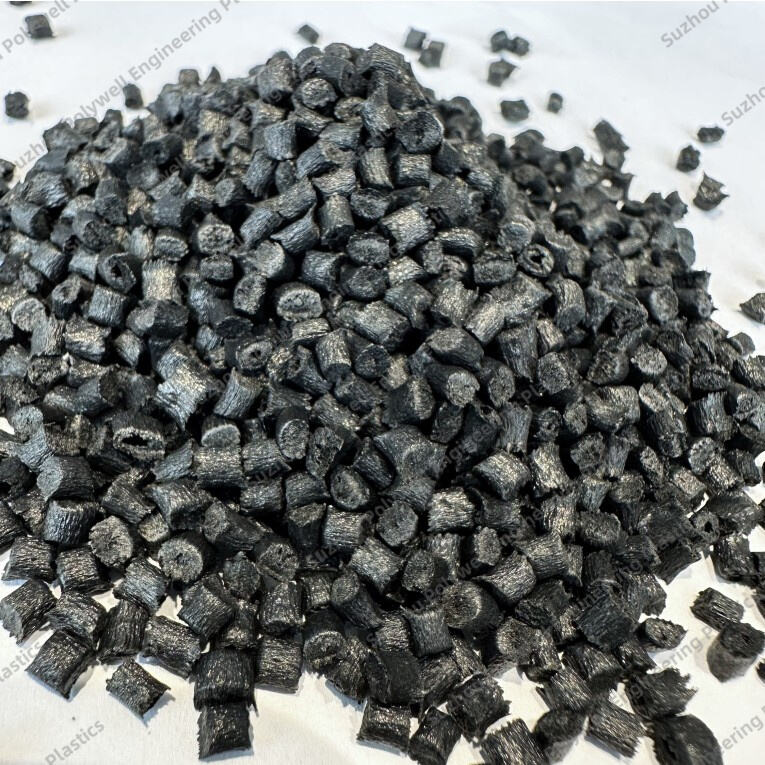
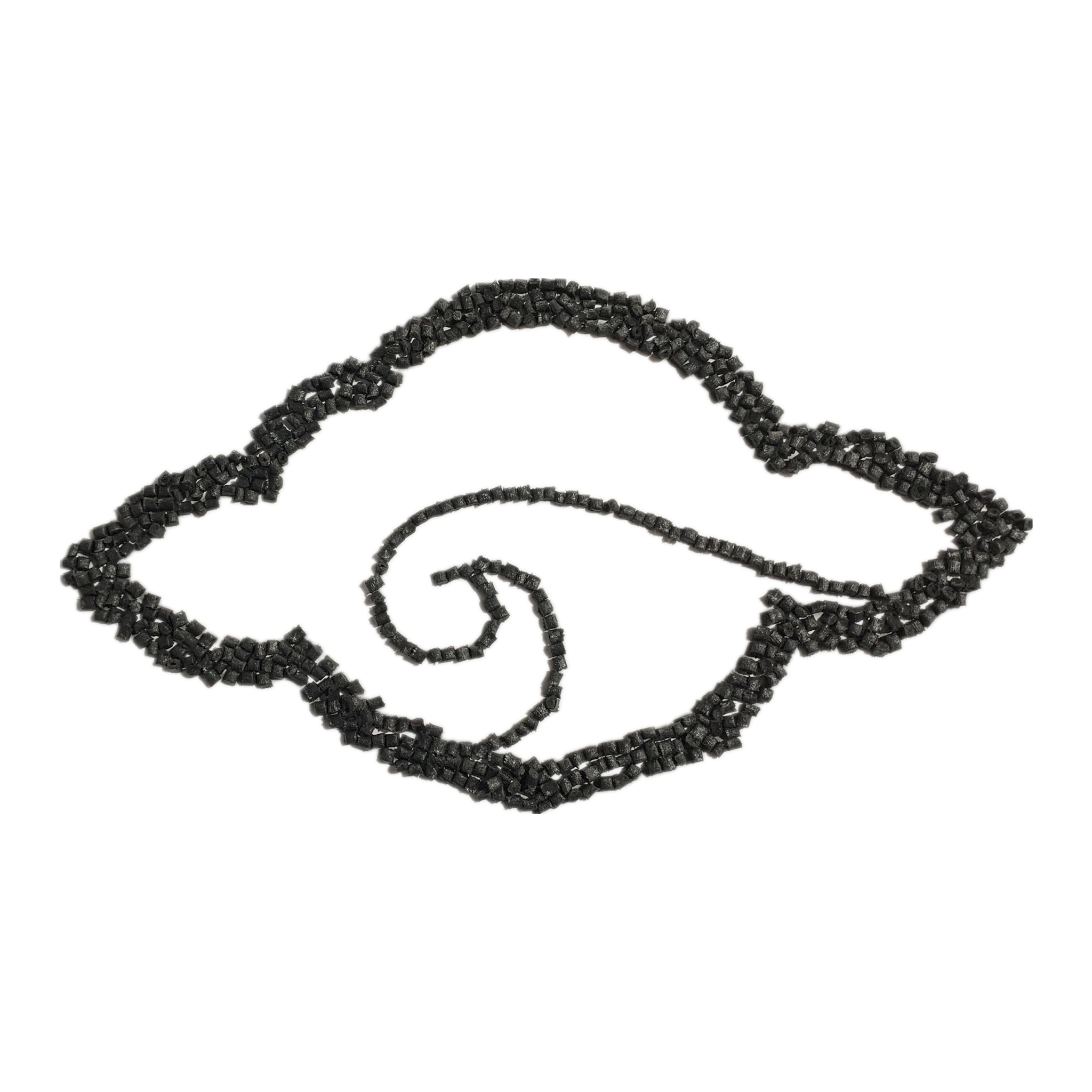
In the field of PA66 compounding, especially for granulation applications requiring glass fiber (GF) reinforcement, the choice of extruder directly determines the dispersion quality of glass fibers and the final performance of granules. While single screw extruders have their merits in simple formulations and cost control, twin screw extruders stand out in creating superior granule performance by achieving uniform glass fiber dispersion in a network structure—an advantage that becomes irreplaceable in high-performance PA66 granulation.
Core Mechanical Design: The Foundation of Glass Fiber Network Dispersion
The fundamental difference between single screw and twin screw extruders lies in their screw configuration, which directly impacts how glass fibers are processed.
- Single screw extruders rely on a single rotating shaft, where material melting and mixing depend primarily on friction between the screw, barrel, and the material itself. This linear, one-way shear action leads to uneven force distribution: glass fibers tend to clump along the barrel walls or break due to localized high shear, failing to form a uniform dispersion.
- Twin screw extruders, by contrast, feature two intermeshing screws that rotate in the same (corotating) or opposite direction. This design acts like a "precision mixing system"—the screws not only convey material but also generate multi-directional shear, kneading, and folding forces. The meshing gaps between the screws effectively break up glass fiber agglomerates, while the continuous kneading action spreads individual fibers evenly throughout the PA66 matrix, forming a three-dimensional network structure. This network is the key to enhancing the mechanical strength, thermal stability, and dimensional consistency of the final granules.
According to 2023 data from the Polymer Processing Report, twin screw extruders reduce glass fiber clumping rates by over 70% compared to single screw models, with fiber dispersion uniformity reaching 95%—a critical prerequisite for forming a stable fiber network.
Material Processing Precision: Protecting Fiber Integrity for Network Formation
PA66 granulation with glass fibers requires a balance between two core goals: maintaining fiber length (to ensure structural support) and achieving uniform dispersion (to form the network). Twin screw extruders excel at both through precise temperature and shear control.
Temperature Stability: Avoiding Fiber Degradation and Matrix Damage
PA66 has strict thermal requirements—processing temperatures must be controlled between 260–270°C, as exceeding 285°C causes material degradation, which undermines fiber-matrix bonding.
- Single screw extruders suffer from temperature fluctuations of ±8°C during operation, leading to "hot spots" that degrade PA66 and weaken the bond with glass fibers. This not only prevents network formation but also reduces granule performance.
- Twin screw extruders maintain temperature fluctuations within ±3°C (and as low as ±1.5°C in modern models), as verified by the Journal of Advanced Polymers in 2022. The modular barrel design and precise heat transfer ensure consistent temperatures throughout the processing zone, protecting both the PA66 matrix and glass fibers from thermal damage. This stable environment allows the fiber-matrix interface to form strong bonds, laying the groundwork for a robust fiber network.
Shear Control: Preserving Fiber Length While Ensuring Dispersion
Glass fiber length directly affects the strength of the network—shorter fibers cannot form effective connections, while overly long fibers tend to clump.
- Single screw extruders generate unidirectional, concentrated shear, resulting in fiber breakage rates exceeding 18% when glass fiber content reaches 30%. Broken fibers are too short to form a continuous network, leading to inconsistent granule mechanical properties.
- Twin screw extruders optimize shear distribution through engineered screw elements:
- Kneading blocks increase dispersive mixing intensity by 40%, breaking up agglomerates without excessive fiber cutting;
- Reverse screw components reduce peak shear stress by controlling material reflux, further preserving fiber length;
- Variable flight depth maintains stable pressure (±2 MPa) across zones, ensuring uniform fiber distribution.
Tests show that twin screw extruders limit glass fiber breakage to less than 5% even with 40% glass fiber content. The retained fiber length (typically 0.2–0.5 mm) allows fibers to interlock in the PA66 matrix, forming a dense network that significantly enhances tensile strength, flexural modulus, and impact resistance of the granules.
Mixing and Plasticizing Performance: Optimizing Network Uniformity
The success of glass fiber network formation depends on the extruder’s ability to achieve homogeneous mixing of PA66 and glass fibers—an area where twin screw extruders outperform single screw models in granulation.
Overcoming Single Screw Limitations in Complex Formulations
Single screw extruders struggle with filled PA66 compounds (e.g., ≥30% glass fiber content) due to poor homogenization. Shear distribution variations of up to 15% lead to uneven fiber dispersion: some areas have excessive fibers (causing brittleness), while others have too few (reducing strength). Additionally, inconsistent residence time causes 5% polymer breakdown, further weakening the fiber-matrix interface and preventing network formation.
Twin Screw’s Modular Design: Tailored for Network Dispersion
Twin screw extruders’ modular screw configurations can be customized for glass fiber-reinforced PA66 granulation:
- Dispersive mixing elements (e.g., kneading blocks) break down fiber agglomerates into individual fibers;
- Distributive mixing elements spread fibers evenly across the matrix, ensuring each granule contains a consistent fiber network;
- The ability to feed glass fibers at specific zones (mid-barrel) minimizes fiber exposure to high temperatures and shear, preserving length and integrity.
This targeted design results in PA66 granules with a uniform fiber network, where tensile strength is improved by 30–50% and flexural modulus by 40–60% compared to single screw-produced granules, according to AMI Consulting’s 2023 research.
Production Efficiency and Granule Quality Stability
For medium-to-high volume PA66 granulation (50–200 tons/year), twin screw extruders ensure both production efficiency and consistent network dispersion, reducing waste and improving cost-effectiveness.
Stable Throughput Even with High Fiber Content
- Single screw extruders see a 30–40% drop in throughput when processing 30% glass fiber-reinforced PA66, as the high-resistance filled material disrupts the conveying process.
- Twin screw extruders maintain stable throughput of 25–35 kg/hr regardless of fiber content, thanks to their efficient material conveying and pressure distribution. This consistency ensures uniform fiber network formation across all batches, avoiding quality fluctuations.
Dimensional and Performance Consistency
The fiber network’s uniformity directly translates to granule quality stability:
- Twin screw extruders control granule density variation within ±2%, compared to ±12% for single screw models.
- Thickness tolerance of extruded strips (a precursor to granulation) is kept within ±0.07 mm, ensuring each granule has the same fiber network density.
In 24-hour continuous production, twin screw extruders’ temperature stability (±1.5°C) and pressure control (45–50 MPa) prevent network breakdown or uneven dispersion, reducing rejected products by 5–7% compared to single screw systems.
Cost-Benefit Analysis: Long-Term Value in High-Performance Granulation
While twin screw extruders require a 30–50% higher initial investment than single screw models, their advantages in glass fiber network dispersion deliver greater long-term value for PA66 granulation, especially for high-fiber-content formulations (≥25% glass fiber):
Reduced Material Waste
Twin screw extruders cut waste by 8–12% by minimizing fiber clumping, material degradation, and quality rejects. For a facility producing 150 tons/year of high-fiber PA66 granules, this translates to 12–18 tons of saved raw materials annually.
Energy and Maintenance Balance
- Twin screw extruders consume 18–22% less energy per kilogram of high-fiber PA66 than single screw models, thanks to efficient heat transfer and mixing.
- While annual maintenance costs are 40% higher (due to wear from abrasive glass fibers), the savings from reduced waste and improved granule performance offset this cost—especially for applications requiring high-performance granules (e.g., thermal break strips, automotive components, electronic housings).
Market Competitiveness
Granules with a uniform glass fiber network command a premium in the market due to their superior mechanical properties and consistency. Twin screw-produced granules meet the strict requirements of high-end applications, opening up opportunities for manufacturers to enter profitable market segments that single screw extruders cannot reach.
Conclusion: Twin Screw Extruders—The Optimal Choice for High-Quality PA66 Granulation
For PA66 granulation, especially when glass fiber reinforcement is required, twin screw extruders’ unique ability to disperse glass fibers into a uniform network structure is a game-changer. Their mechanical design, precise temperature/shear control, and modular flexibility ensure that each granule has consistent, high-performance properties—far beyond what single screw extruders can achieve. While the initial investment is higher, the long-term benefits of reduced waste, stable quality, and market competitiveness make twin screw extruders the preferred choice for manufacturers aiming to produce superior PA66 granules. Whether for thermal break strip raw materials, automotive parts, or other high-demand applications, the glass fiber network formed by twin screw extrusion delivers granules that stand out in strength, stability, and reliability.
 Hot News

 EN
EN