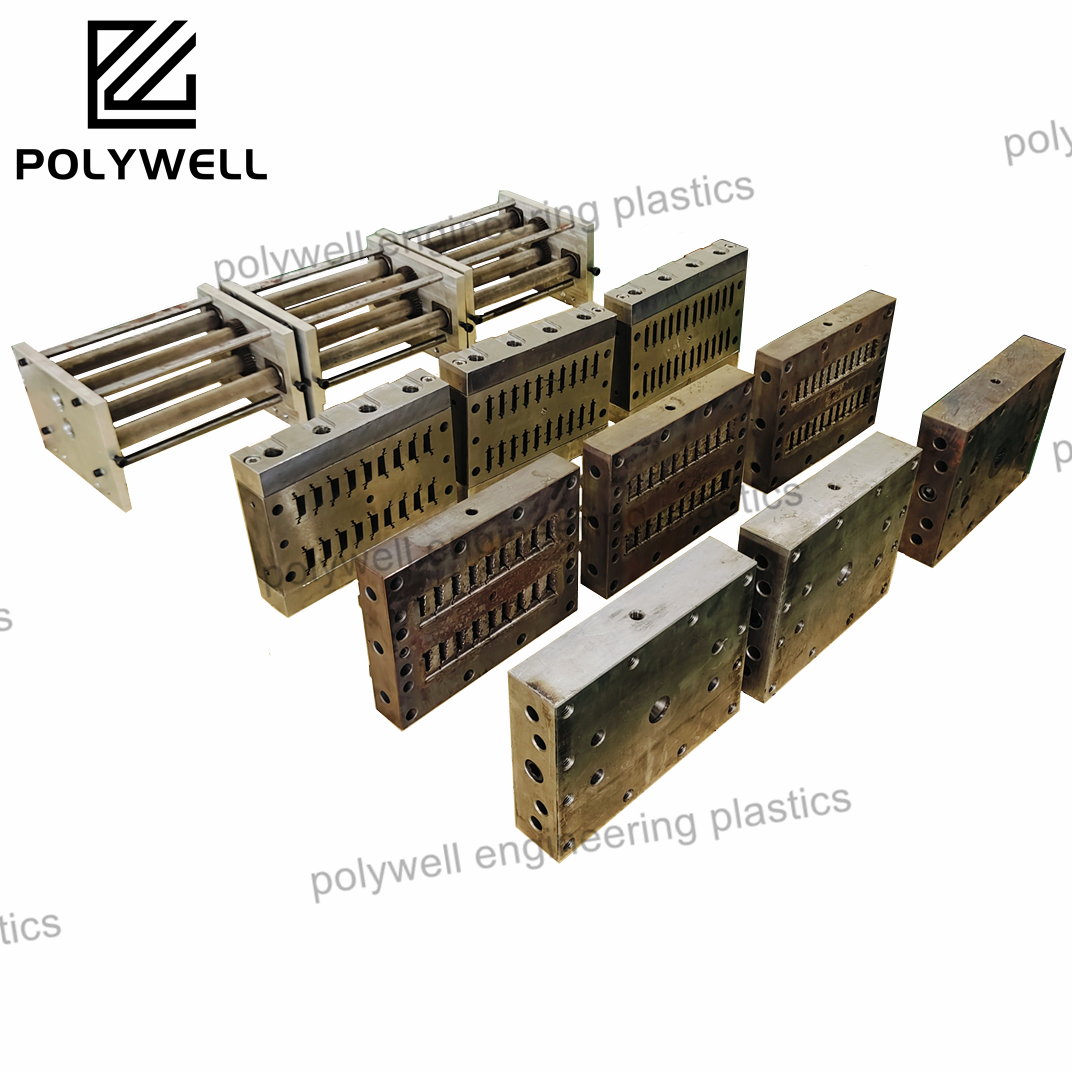
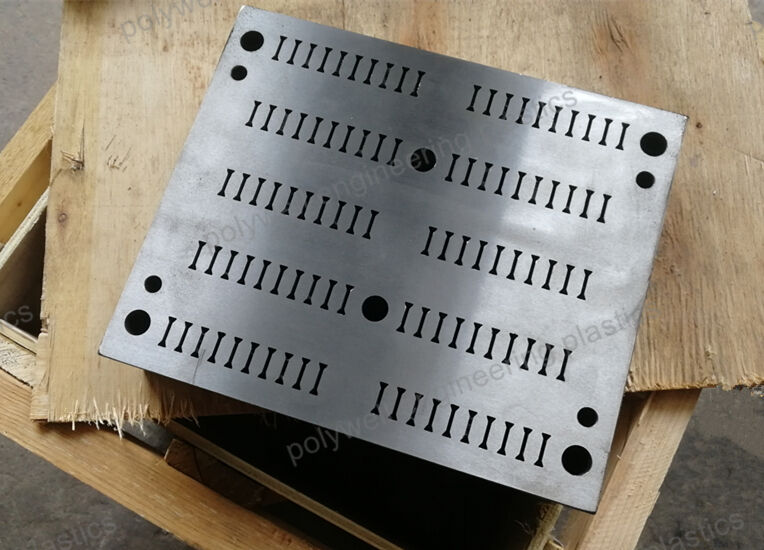
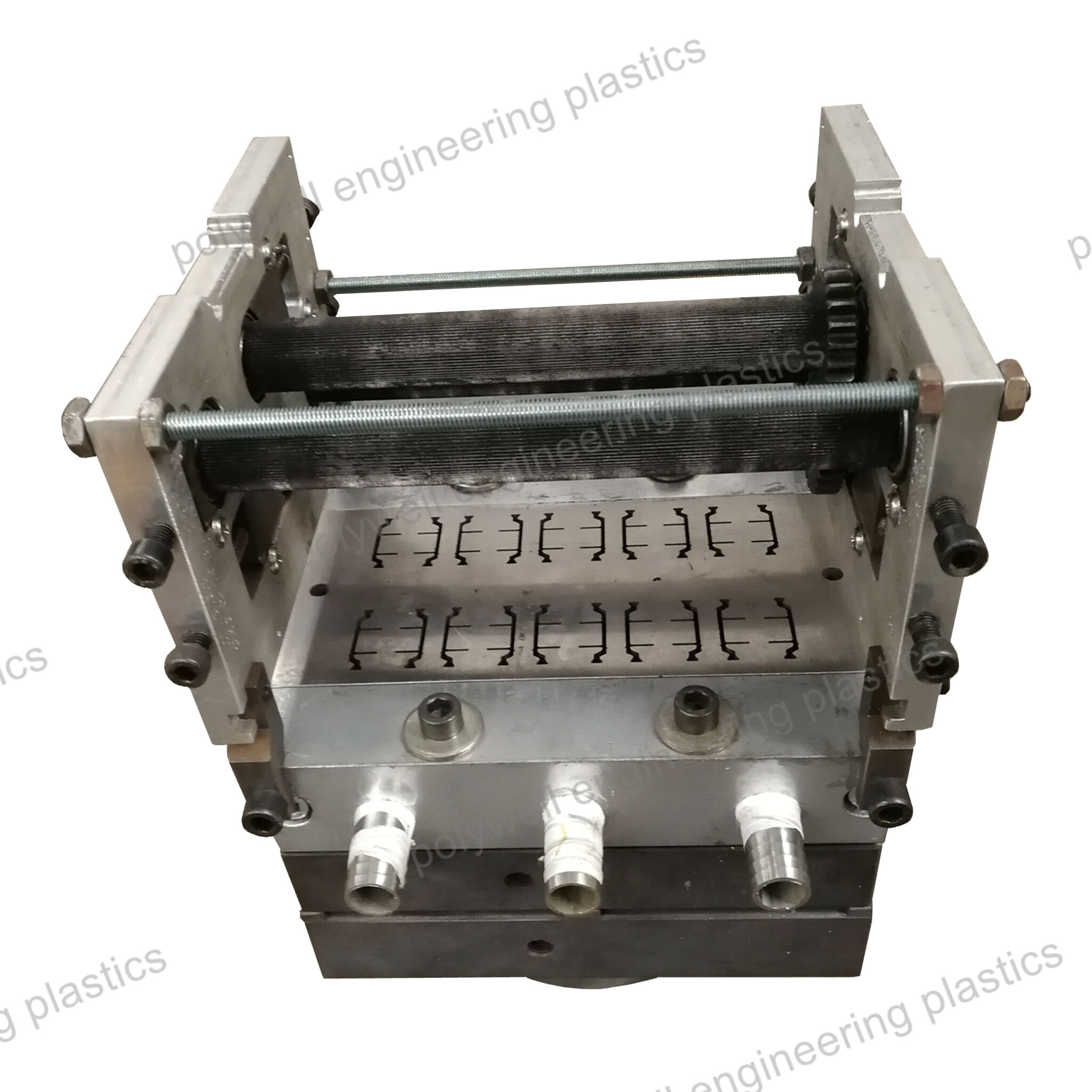
Laser Marking Printer for Polyamide Thermal Break Strips

All Categories

POLYWELL Laser Marking Printer: Custom Marking for Polyamide Thermal Break Strips

This page from POLYWELL offers laser marking printers for custom marking (logos, specifications) on polyamide thermal break strips, part of its full line production support with 15+ years of expertise. The laser marking printer ensures high contrast, durable marks on polyamide, suitable for branding or quality control. It supplies the printer along with technical support (e.g., adjusting marking depth for different strip thicknesses) and DFM services to integrate it into extrusion lines. On site service assists with setup, while lifelong training covers operation. Client feedback (Mr. Tiago praising equipment usability) reflects quality, and the 6 step cooperation process includes laser marking printer quoting and customization for manufacturers.
Get A Quote

Advantages of the product

Permanent and High Contrast Marking for Traceability

Our laser marking machines create permanent, high contrast marks on the polyamide strip that will not fade, smear, or wear off under normal handling and use. This permanence is essential for traceability, allowing manufacturers to imprint batch numbers, date codes, material grades, or logos. This supports quality control, simplifies inventory management, and enables precise tracking throughout the product's lifecycle.

Related products

A laser marking printer is an industrial-grade system that utilizes a focused laser beam to create permanent, high-contrast marks on a vast array of materials. Unlike conventional printers that apply ink, this technology alters the surface properties of the substrate through processes like annealing, foaming, carbonization, or engraving. The core components include a laser source (fiber, CO2, or UV), galvo scanners for beam steering, an F-theta lens for focus, and a sophisticated software controller. This software translates digital designs—such as serial numbers, Data Matrix codes, logos, or alphanumeric text—into precise beam movements. The key advantage of this non-contact method is its exceptional durability; the marks are resistant to abrasion, heat, and chemical exposure, ensuring legibility throughout a product's lifecycle. This makes it indispensable for applications requiring permanent traceability, such as direct part marking (DPM) on automotive components, medical devices, and aerospace parts. In the context of manufacturing extruded profiles, a laser marking printer can be seamlessly integrated into the production line to inscribe vital information like material type, production date, and quality certifications directly onto the plastic or composite surface. Its operational efficiency is high, with minimal maintenance required beyond periodic lens cleaning, and it eliminates the ongoing cost and environmental concerns associated with inks and solvents. The versatility in markable materials, from metals and plastics to ceramics and coated surfaces, coupled with the ability to mark on curved or uneven surfaces, solidifies the laser marking printer as a cornerstone of modern, automated, and sustainable manufacturing processes.

Frequently Asked Questions

What are the advantages of laser marking over ink printing?

Laser marking offers permanent, high contrast marks that are resistant to abrasion, heat, and solvents, unlike ink which can fade, smudge, or wear off. It is a non contact, clean process that requires no consumables, making it more environmentally friendly and cost effective in the long run. It also allows for incredibly precise and flexible marking of complex graphics, barcodes, and variable data.

Related Articles

Help you select the raw material of thermal break strips

30

Dec

Help you select the raw material of thermal break strips

POLYWELL provides expert guidance on selecting the best raw materials for thermal break strips, ensuring high performance and durability. Our PA66GF25 granules deliver superior insulation for energy-efficient solutions.
View More
The Manufacturing Process of PA66GF25 Granules Explained

18

Nov

The Manufacturing Process of PA66GF25 Granules Explained

POLYWELL manufactures high-quality PA66GF25 granules through a detailed process, ensuring superior strength and thermal stability for various applications.
View More
High-Quality Thermal Break Strips of Extrusion Mold Design Optimization

17

Dec

High-Quality Thermal Break Strips of Extrusion Mold Design Optimization

Optimize extrusion mold design for high-quality thermal break strips, ensuring stability, efficiency, and adaptability in production.
View More
Single Screw Extruder vs. Twin Screw Extruder: What's the Difference?

10

Jun

Single Screw Extruder vs. Twin Screw Extruder: What's the Difference?

Explore the key differences between single and twin screw extruders, focusing on design, functionality, and application in insulation manufacturing. Learn their benefits in terms of consistency, cost-efficiency, and material compatibility, with FAQs addressing common reader queries.
View More

customer evaluation

Karter

The speed of the galvo scanners is astonishing. It can mark our strips at full production line speed without any bottleneck. The flexibility to instantly change the mark—from a simple date code to a complex logo—through software is a huge operational advantage.

Get a Free Quote

Our representative will contact you soon.
Email
Name
Company Name
Message
0/1000
Permanent and High Contrast Marking for Traceability

Permanent and High Contrast Marking for Traceability

Our laser marking machines create permanent high contrast marks on the polyamide strip that will not fade smear or wear off under normal handling and use This permanence is essential for traceability allowing manufacturers to imprint batch numbers date codes material grades or logos This supports quality control simplifies inventory management and enables precise tracking throughout the products lifecycle
Non Contact Process that Prevents Material Damage

Non Contact Process that Prevents Material Damage

Unlike mechanical engraving or ink printing laser marking is a non contact process The laser beam etches the surface without applying any physical force to the strip This eliminates the risk of mechanical stress deformation or micro cracks that could compromise the structural integrity of the thermal break ensuring the marked product remains as strong and reliable as an unmarked one
High Speed and Programmable for Flexible Coding

High Speed and Programmable for Flexible Coding

Our laser markers operate at high speeds seamlessly keeping pace with the extrusion line without creating a bottleneck The marking content is fully programmable via software allowing for quick changes between different codes logos or sequential numbers without any physical tooling changes This offers immense flexibility and efficiency for just in time production runs
Inquiry Inquiry Email Email WhatsApp WhatsApp Wechat Wechat
Wechat
TopTop

Related Search